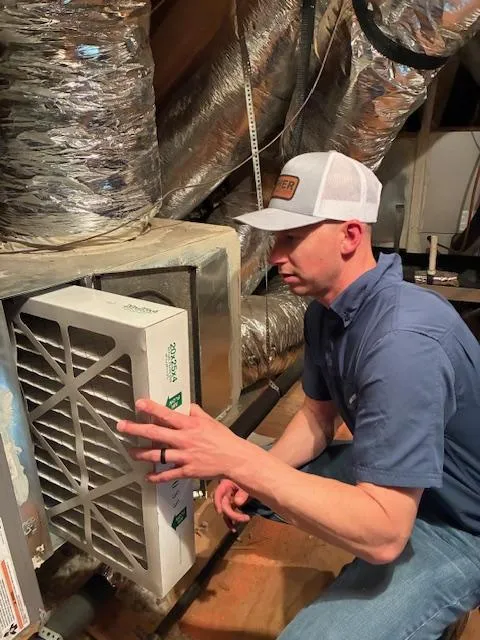
Why Access to Your HVAC Equipment Matters
When you’re buying or owning a home, access to the HVAC system or water heater might not be the first thing on your mind.
As a home inspector, I see access problems all the time. Today, I want to walk you through what the building code (based on the International Residential Code or IRC) requires for safe, practical access to your mechanical appliances — and why it matters for you as a homeowner or future buyer.
What “Access” Really Means
The code doesn’t just want you to be able to “see” your furnace. It requires enough space to inspect, repair, remove, or replace the appliance without damaging the home’s permanent construction (like walls, floors, joists, or drywall).
In simple terms: technicians need to be able to do their job safely and efficiently. If they can’t, repairs get delayed, costs go up, and safety can be compromised.
Key Access Requirements for Common Appliances
1. General Working Space in Front of the Appliance
Most furnaces and air handlers need:
A level work platform or space at least 30 inches deep and 30 inches wide in front of the control side (or more if the manufacturer requires it).
At least 18 inches of clearance on the control side for room heaters (no platform required).
2. Appliances in Tight Spaces (Closets, Alcoves, or Compartments)
If your furnace or air handler is tucked into a closet or alcove:
You need at least 12 inches wider total working space than the appliance itself.
At least 3 inches of working space on each side, back, and top (more may be needed for combustion air or clearances to combustibles).
3. Attic Installations — One of the Most Common Problem Areas
Attics are tricky, and the code has very specific rules here:
An access opening of at least 22 inches by 30 inches.
A continuous, unobstructed path of solid flooring at least 24 inches wide, 30 inches high, and no more than 20 feet long from the access opening to the appliance. If it is over 20 feet long the pathway height must be at least 6 feet and not longer than 50 feet.
A level service platform in front of the appliance: 30 inches wide by 30 inches deep by 30 inches high.
An opening large enough to remove the largest piece of the appliance if it needs to be taken out.
A switched light fixture and receptacle near the appliance for safe work.
Many homes fall short here — narrow catwalks, missing platforms, or paths blocked by insulation or framing are very common.
4. Crawl Space Installations
Similar rules apply, but with extra considerations for moisture and support:
Access opening at least 22 inches by 30 inches.
Unobstructed path 22 inches wide, 30 inches high, and no more than 20 feet long (or unlimited length if the entire path is at least 6 feet high and 22 inches wide).
A firm, level service platform or concrete pad.
Proper clearances from soil and sides of any pit.
Real-World Examples from Inspections
I often find:
Attic access paths that are too narrow or too low for a technician to safely reach the unit.
Furnaces crammed into closets with almost zero side or front clearance.
Missing service platforms in attics or crawl spaces.
These issues don’t always make a home “unsafe” immediately, but they can lead to:
Expensive repairs when technicians have to tear out walls or framing.
Longer downtime during breakdowns (especially in extreme Texas heat or cold).
Higher service calls because the job takes longer.
What Should You Do as a Homeowner or Buyer?
During a home inspection: Pay attention to the mechanical access section of your report. If the inspector flags limited access, ask questions about what it means for future repairs.
Before buying: Factor potential access-related repair costs into your negotiations.
As a current homeowner: If your furnace or A/C is hard to reach, consider improvements when you replace the unit (many contractors can add platforms, widen paths, or improve lighting during installation).
Maintenance tip: Keep access paths clear of storage, insulation, or debris.
If you’re in the Fort Worth area and need a thorough home inspection that covers mechanical systems in detail, feel free to reach out. I’m happy to walk through any questions you have about your current home or one you’re considering buying.
Stay informed, stay safe, and keep your home’s “hidden” systems accessible!
— Kyle Fisher, Home Inspector
Fort Worth, Texas
Residential Code References
The appliance access standards listed above are from M1305 of the International Residential Code (IRC) 2021.