How Homes Are Built To Prevent Contamination Of Your Water Supply
Backflow prevention might not be the most exciting topic when you're buying or maintaining a home, but it's an important safeguards for your family's health. As a professional home inspector, I see issues with water supply systems during inspections that could lead to contaminated drinking water if left unaddressed. Understanding these building requirements helps homeowners protect their property and gives home buyers confidence in what they're purchasing.
What Is Backflow and Why Should You Care?
Backflow occurs when water flows in the wrong direction—back into your home's potable (drinking) water supply from a contaminated source. This can happen due to backpressure (higher pressure from another system pushing contaminants in) or backsiphonage (a drop in pressure in the main supply that sucks contaminants back in).
Common scenarios include:
A garden hose left in a bucket of fertilizer or pool water.
Lawn irrigation systems connected to the household supply.
Improper connections at sinks, washing machines, or toilets.
If backflow happens, chemicals, bacteria, or other contaminants can enter your drinking water. There are several specific protections to prevent this.
Two Main Ways to Protect Against Backflow
1. Air Gaps
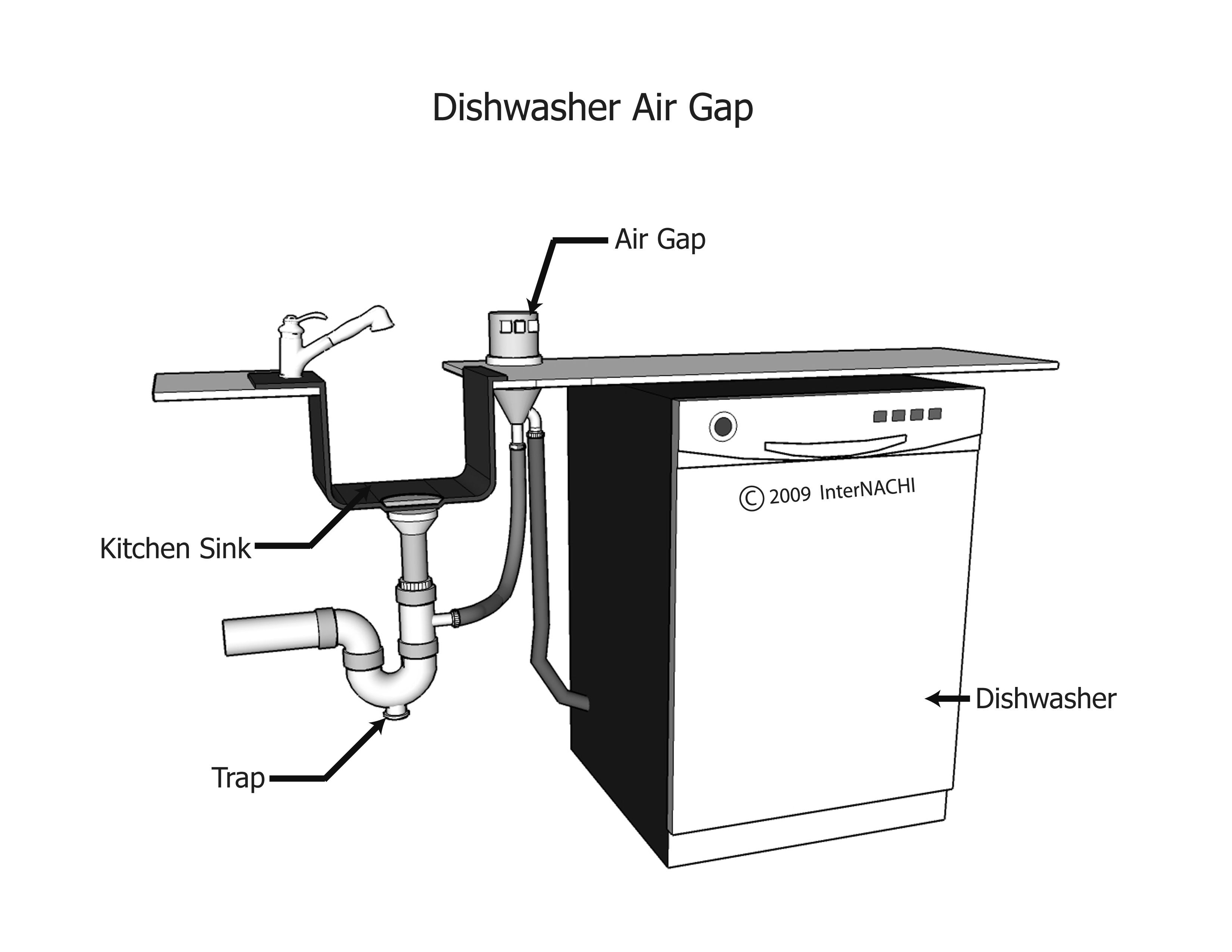
An air gap is the simplest and most reliable method. It's a physical, unobstructed vertical space between the end of a faucet or pipe and the flood rim of a sink, tub, or receptor. This gap ensures nothing can siphon contaminated water back into the supply line.
Key requirements for air gaps include:
The minimum air gap distance depends on the fixture's effective opening size.
For fixtures away from walls, the gap must be at least twice the diameter of the outlet in many cases.
Near walls or corners, measurements range from 3-4 times the diameter based on distance to sidewalls
Home inspectors check these gaps at sinks, dishwashers, and other fixtures because even small oversights can create risks.
2. Backflow Prevention Devices
When an air gap isn't practical, approved mechanical devices are required:
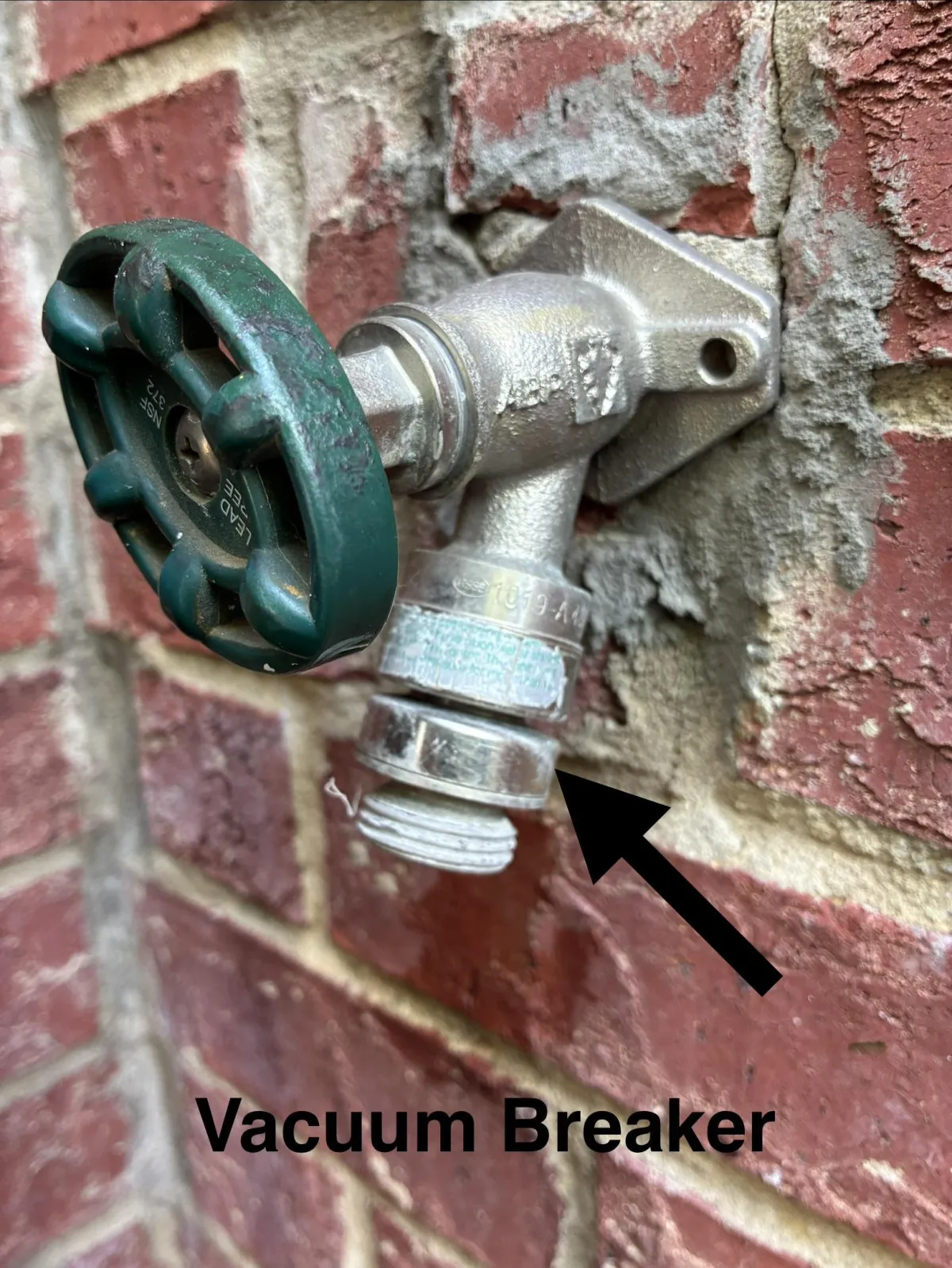
Atmospheric Vacuum Breakers (common on hose bibbs).
Pressure Vacuum Breakers.
Reduced Pressure Backflow Preventers (used for irrigation systems where chemicals are involved).
Special antisiphon fill valves for toilets.
What Home Inspectors Look For
During a thorough home inspection, we evaluate:
Hose bibbs with vacuum breakers.
Dishwashers with either an air gap device on the countertop or a high loop in the drain hose.
Irrigation system connections and backflow preventers.
Toilet fill valves that meet antisiphon requirements.
Any cross-connections that could allow contamination.
Tips for Homeowners and Home Buyers:
Never submerge your hose in pools, buckets, or puddles.
Install and maintain backflow preventers on outdoor faucets and sprinkler systems.
Have irrigation backflow devices tested annually.
Check sinks and around appliances for proper air gaps.
Consider a professional plumbing inspection if your home is older.
Protect Your Home's Most Valuable Resource
Clean, safe drinking water is something we often take for granted—until there's a problem. Proper backflow prevention is required for good reason: it protects your family's health and your property value.
If you're in the market for a new home or want peace of mind about your current one, schedule a professional home inspection today. Our inspections go beyond the basics to evaluate critical systems like plumbing and water supply safety.
Contact us today at (817) 518-2220 or book online at FisherHomeInspections.com
— Kyle Fisher, Professional Home Inspector
Keller, Texas
Residential Code References
The backflow prevention standards listed above are from P2901 and P2902 of the International Residential Code (IRC) 2021.