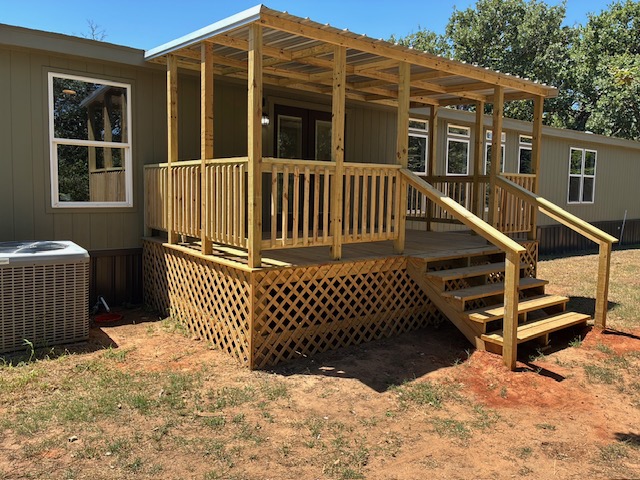
Deck Safety: What Homebuyers can Look for and Ask Part 1
Decks are one of the most popular outdoor living features in homes, but they are also one of the most common sources of safety problems. Improperly built or poorly maintained decks can fail, leading to injuries or costly repairs. Understanding the construction basics can help homeowners and home buyers spot red flags during a home inspection or when planning repairs.
General Deck Construction Requirements
Decks must be built with approved materials:
Preservative-treated lumber (appropriate for outdoor use), naturally durable wood, engineered wood approved for decks, or certain composites and plastics.
Fasteners must be corrosion-resistant: hot-dipped galvanized, stainless steel, or other approved coatings. Nails, screws, bolts, hangers, and connectors all need to meet these standards.
These rules apply mainly to single-level decks with straightforward framing. Multi-level decks, decks supporting heavy loads (like hot tubs), or complex designs usually need engineering.
Proper Attachment to the House Is Critical
One of the biggest failure points is how the deck ledger board connects to the house.
Key rules include:
The ledger must be at least 2x8 nominal, #2 grade or better, and preservative-treated (or approved durable wood).
It must attach to a solid joist or rim board of adequate thickness—not through brick veneer, stone, siding, or to cantilevered framing, I-joists, or floor trusses without special approved details.
Use lag screws or machine bolts (minimum ½-inch diameter, hot-dipped galvanized or stainless) with proper washers. Carriage bolts are not allowed for permanent attachment because a washer cannot be properly installed on one end.
Spacing of fasteners must be staggered and penetrate fully.
Lateral (sideways) load resistance is required. This usually means installing approved lateral load connectors so the deck cannot pull away from the house.
Common problems inspectors see:
Ledgers bolted through brick veneer or masonry.
Attachment to I-joist rim boards or floor trusses without proper hardware.
Use of nails only, undersized fasteners, or carriage bolts.
Missing or improper flashing, which allows water to damage the house structure.
Flashing between the ledger and the house is required. Aluminum flashing should not contact treated wood. A water-resistive barrier and proper detailing help keep moisture out.
Joists, Beams, Posts, and Footings
Joists: Sized and spaced according to span tables (species, size, and spacing matter). Provide lateral restraint at ends and bearing points. Support on at least 1½ inches of wood or 3 inches of masonry, or use approved hangers. Limited cantilever distances apply.
Beams: Built-up beams must be properly fastened together. Splices go over posts. Cantilevers are limited.
Posts: Maximum heights depend on size (for example, 4x4 posts are limited; larger posts can be taller). Posts must sit on proper footings and be restrained against lateral movement.
Footings: Sized for the tributary area and local snow/soil conditions. Place at or below frost depth when the deck is attached to the house.
Deck boards (decking) also have rules for thickness, joist spacing, and fastening so they do not create trip hazards or allow excessive movement.
Why This Matters for Homeowners and Buyers
Many older decks were built before current standards or were modified over time. Problems like missing lateral connectors, improper ledger attachment, undersized footings, or deteriorated fasteners are common. A deck that looks fine from the surface can still have serious structural weaknesses.
During a home inspection, a qualified inspector will typically check:
How the ledger attaches to the house
Fastener type, size, and spacing
Presence of proper flashing
Joist and beam sizing and support
Post connections and footing conditions
Overall condition of wood and hardware
If issues are found, repairs may range from adding connectors and proper flashing to more extensive reconstruction. Always follow manufacturer instructions for hardware and consider engineering for non-standard designs.
Practical Tips
Never assume a deck is safe just because it has been standing for years.
When buying a home, request that the inspector pay close attention to the deck, especially if it is elevated or attached to the house.
For new or replacement decks, hire contractors familiar with current code requirements and obtain necessary permits and inspections.
Maintain your deck: keep it clean, check for loose fasteners, rotting wood, and proper drainage.
A well-built deck adds enjoyment and value. An improperly built one is a liability. Understanding these basic principles helps you ask better questions of builders, contractors, and inspectors.
Ready to schedule a home inspection?
Contact us today at (817) 518-2220 or book online at FisherHomeInspections.com. Whether buying, selling, or maintaining your current home, we’re here to help keep your family safe.
— Kyle Fisher, Professional Home Inspector
serving all of DFW and North Texas
Residential Code References
The electrical panel standards listed above are from R507of the International Residential Code (IRC) 2021.