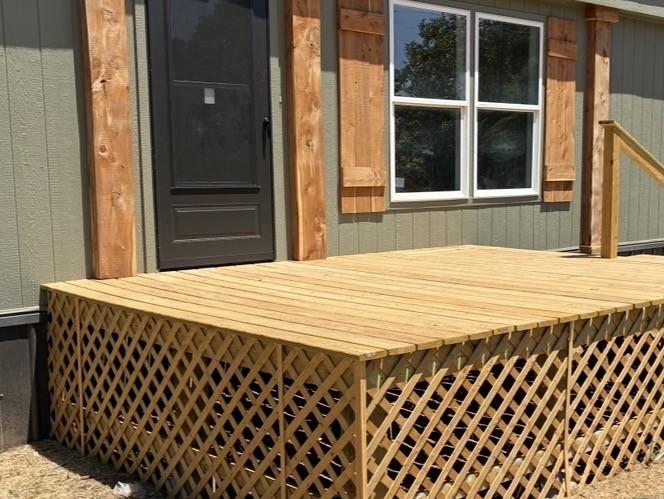
How Should A Proper Deck Be Built?
Decks are one of the most enjoyed outdoor living spaces in Keller and surrounding North Texas homes — and one of the most common sources of serious safety and water-damage issues. Whether you’re buying a home in Keller, Fort Worth, Haslet, or elsewhere in the DFW metroplex, or you already own a house with a deck, understanding these frequent problems can help you avoid costly repairs or, worse, a collapse.
1. Missing or Improper Flashing at the Ledger
The connection where the deck attaches to the house (the ledger board) is a frequent weak point. When water gets behind the ledger, it can rot the house rim joist and band board. Over time this leads to the deck pulling away from the house — a leading cause of catastrophic deck collapses.
Proper flashing should divert water away from the ledger, protect the area around any doors that open onto the deck, and allow any water that does get in to drain out. Sealants and caulk alone are not a substitute for flashing. They require constant maintenance and usually fail first. Older decks in Keller and surrounding areas often have little or no flashing at all, and the results (dark staining, soft wood, and hidden rot) are easy to spot once you know what to look for.
2. Inadequate Ledger Attachment and Missing Lateral Load Connectors
A deck ledger must resist both the weight of people and furniture and strong sideways (lateral) forces. Current standards call for properly sized lag screws or bolts installed in a staggered pattern, with washers, and with the ledger bearing on solid framing — not simply through brick veneer or siding.
Almost every ledger attached to a house also needs lateral-load connectors (commonly 750-lb or 1,500-lb hardware). These connectors are still missing on many decks. Their absence is a defect that should be reported. Homes framed with wood I-joists or floor trusses need extra attention because they may lack a solid rim joist for a secure connection.
3. Stairs, Landings, Handrails, and Guards
Deck stairs create frequent trip and fall hazards. Key points inspectors check:
Maximum riser height 73/4" and minimum tread depth 10" (all risers and treads should be the same to avoid tripping)
Open risers that allow a 4-inch sphere to pass
Solid landings at the top and bottom
Handrails that meet graspable size and shape requirements (a plain 2x4 is not acceptable)
Guard height (36" minimum) and baluster spacing that prevents a 4-inch sphere from passing
Guard posts that are solid 4x4s (not notched) and properly bolted with connectors rather than just nailed or screwed into the rim joist
Horizontal cable or decorative metal fill-ins that create a “ladder effect” can also be flagged as a safety concern, especially with children present.
4. Framing, Joists, Beams, Posts, and Footings
Other common issues include:
Deck joists attached with the wrong hangers, or still using outdated ledger strips
Over-spanned joists or excessive cantilevers
Beams that do not fully bear on top of posts (side-mounted beams are generally not preferred)
Posts that are undersized, notched, or simply buried in soil or concrete without a proper base (these often rot at the ground line)
Missing or inadequate bracing on elevated decks
Footings that are too small or not below frost depth when the deck is attached to the house
In our North Texas climate, moisture, heat, and occasional high winds accelerate deterioration of untreated cut ends and poorly detailed connections.
Why This Matters for DFW area Buyers and Homeowners
A failing deck is more than an eyesore. It is a life-safety issue and a potential five-figure repair once structural members and the house framing are involved. Catching these problems during a pre-purchase inspection (or during a routine maintenance inspection) gives you leverage to negotiate repairs or budget for them realistically.
If you already own the home, addressing flashing, connectors, and guard attachments early is far cheaper than dealing with rot that has already reached the house structure.
Ready to schedule a home inspection?
Contact us today at (817) 518-2220 or book online at FisherHomeInspections.com. Whether buying, selling, or maintaining your current home, we’re here to help keep your family safe.
— Kyle Fisher, Professional Home Inspector
serving all of DFW and North Texas