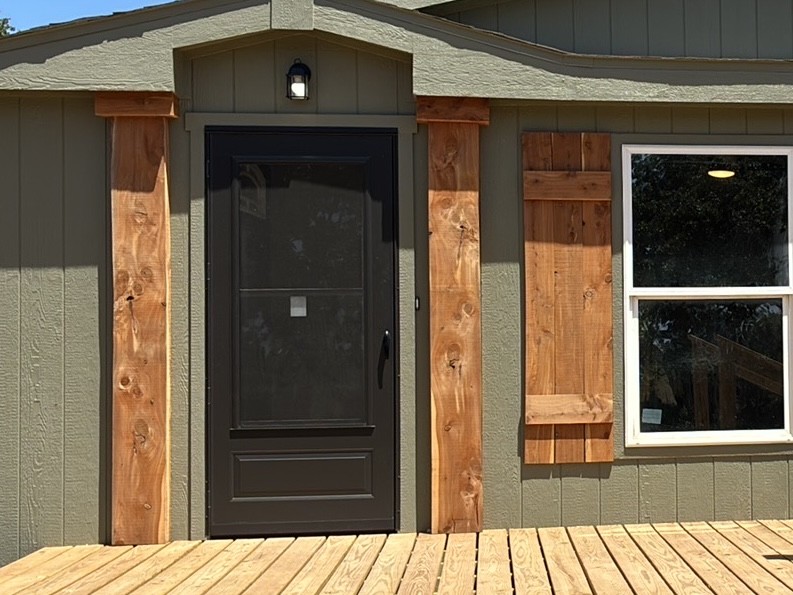
What Safety Components Are Needed Around Doors?
Building codes set specific rules for front/back doors, landings, and safety glazing around doors. These requirements exist so people can get out quickly in a fire or other emergency and so injuries from broken glass are reduced.
Egress Door Requirements
Every house should have at least one side-hinged door that:
Is accessible from all parts of the house
Opens directly to the outside (not through the garage)
Measures at least 36 inches wide and 80 inches tall
Door hinges should be on the inside of the house (break-in prevention safety feature)
Landings at Exterior Doors
A landing (or finished floor) is required on both sides of every exterior door. The landing should be:
At least as wide as the door
At least 36 inches deep in the direction of travel
On the exterior side, the landing (or first tread) may sit no more than about 7¾ inches below the top of the threshold if the door does not swing over the steps. Doors (except screen and storm doors) should not swing over steps.
These rules prevent people from stepping out into open air or tripping when exiting in a hurry.
Safety Glazing In and Near Doors
Most glass in and around doors must be safety glazing (tempered or laminated) so it breaks into small, less dangerous pieces instead of large sharp shards.
Key rules include:
Glazing in doors themselves should be safety glazing.
Glazing within 24 inches of a door and less than 60 inches above the walking surface generally needs to be safety glazing. This applies on both the interior and exterior sides of the door.
Safety glazing is identified by a permanent etched label in one corner of the glass.
Exceptions exist when:
The glass is part of a fixed panel next to a glass door, or
A permanent barrier (perpendicular wall) separates the window from the door on both sides.
Home inspectors check for the etched label and measure distances from the door edges and floor. Missing safety glazing in hazardous locations can be an issue, especially in older homes or after remodeling.
Why This Matters for Homeowners and Buyers
Safety first — Proper egress and landings give everyone a clear path out during an emergency. Safety glass reduces injury risk if someone falls into a door or sidelight.
Insurance and liability — Non-compliant doors or glazing can create problems with insurance claims or resale.
Resale value — Buyers and their inspectors flag these items. Fixing them before listing (or negotiating after an inspection) is usually less stressful and less expensive than dealing with them later.
Everyday usability — Adequate landings and properly sized doors make the home easier and safer to use every day, especially for families with children, older adults, or anyone carrying packages.
What to Do Next
If you’re buying a home, ask your inspector specifically about the egress door, exterior landings, and safety glazing near doors. If you already own the home, walk through with a tape measure and look for the etched safety labels on glass near doors. Simple measurements and a visual check can reveal whether upgrades are needed.
Ready to schedule a home inspection?
Contact us today at (817) 518-2220 or book online at FisherHomeInspections.com. Whether buying, selling, or maintaining your current home, we’re here to help keep your family safe.
— Kyle Fisher, Professional Home Inspector
serving all of DFW and North Texas