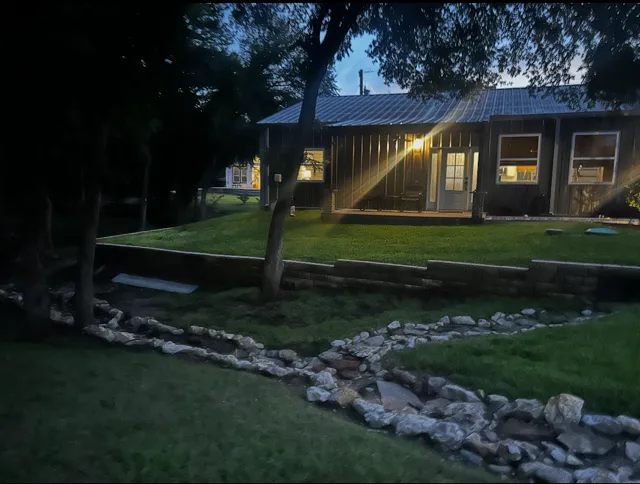
Common Drainage Systems
Proper drainage is one of the most important systems protecting a home. Water that is not directed away from the foundation can lead to crawlspace moisture, foundation movement, and erosion. For homeowners and buyers, understanding the common drainage systems used around residential properties helps you evaluate a property more effectively and spot potential problems early.
This overview covers the most frequent drainage approaches you are likely to encounter when walking a property.
Surface Drainage: Swales and Dry Beds
Drainage swales are shallow depressions or channels in the soil designed to collect and direct surface water to a desired location, such as a street, drainage easement, or lower area of the yard. They are one of the simplest and most common methods of managing runoff.
A swale can be:
Shallow and covered with grass or other landscaping materials so it blends into the yard.
Deeper and lined with stones or rock, in which case it is sometimes called a dry bed.
These features work with gravity. When installed correctly with adequate slope, water flows through them instead of pooling near the house or saturating the soil against the foundation.
Underground Drainage Systems (Often Called French Drains)
When surface swales are impractical—because of limited space, landscaping constraints, or steep slopes that encourage erosion— underground drainage systems can be installed. These are commonly referred to as French drains.
Typical materials include:
Older homes: clay tiles.
Newer homes: flexible corrugated plastic pipe, usually 4 inches in diameter.
These pipes collect water and convey it underground to a discharge point. Because much of the system is buried, it is not always obvious whether it is functioning. Visible components (downspout connections, terminations, or cleanouts) may be present, but confirming that water actually flows through the system often requires observation during or after rainfall, or professional testing.
Common Components of Underground Systems
Water enters underground drains from several sources:
Gutter downspouts connected directly to the underground pipe.
Catch basins (grated openings at the surface that capture runoff).
Dry wells (holes filled with stone that allow water to infiltrate into the ground).
Channel drains (long linear drains often installed across driveways or patios).
Discharge typically occurs at the street, into a swale, creek, or drainage easement. The end of the pipe is often left open to the air (sometimes called “daylighting”). Where there is insufficient slope for free discharge, a bubbler may be used. A bubbler is a device that opens above ground to release water when flow is present and closes when flow stops.
Sump pumps appear in some exterior drainage setups when water must be lifted to reach a suitable discharge point. The pump sits in a pit or catch basin that collects surface or subsurface water and mechanically moves it to the discharge location.
What Homeowners and Buyers Should Watch For
Slope and continuity — Surface swales should slope consistently away from the house.
Visible connections — Check downspout-to-underground connections and any surface terminations or bubblers. Look for signs of past overflow or erosion around these points.
Catch basins and channel drains — These should be free of debris and connected to a functioning underground line.
Performance after rain — Standing water near the foundation, water emerging from unexpected places, or erosion channels can indicate the system is inadequate or blocked.
Maintenance — Keep gutters clean, clear debris from catch basins and channel drains, and ensure discharge points remain unobstructed. Buried corrugated pipe can become crushed or clogged over time.
Why This Matters
Effective drainage protects the foundation, reduces the risk of water intrusion, limits soil saturation that can cause settlement or heave, and helps preserve landscaping and hardscape. For buyers, understanding these systems allows more informed questions during the inspection process and better evaluation of long-term maintenance needs. For current owners, addressing drainage issues early is almost always less expensive than repairing water damage later.
If you are buying a home or concerned about drainage on your current property, a thorough exterior inspection that includes observation of how water moves around the house—ideally after rainfall—provides the most useful information. Professional inspectors look for both the presence of these systems and evidence of how well they are performing.
Ready to schedule a home inspection?
Contact us today at (817) 518-2220 or book online at FisherHomeInspections.com. Whether buying, selling, or maintaining your current home, we’re here to help keep your family safe.
— Kyle Fisher, Professional Home Inspector
serving all of DFW and North Texas