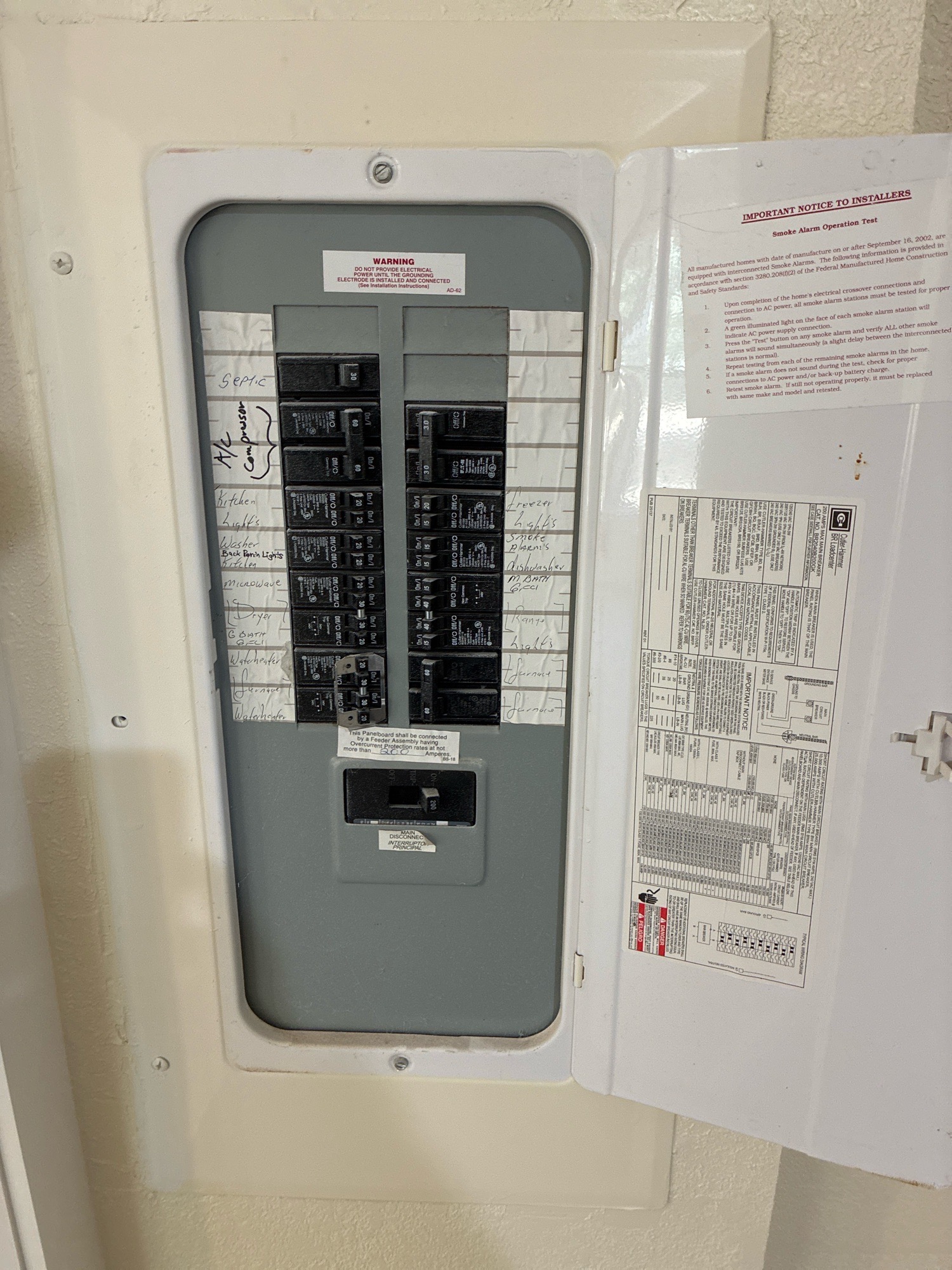
Electrical Panel Safety: Guide For Home Owners & Home Buyers
Your home’s electrical panel (the breaker box) is one of the most important pieces of equipment in the house. It brings power in and sends it out to every circuit. Because the panel contains live electrical parts, it requires a clear working space around it. This space lets electricians (and homeowners) safely open the door, reset breakers, and work on the equipment when needed.
During a home inspection in North Texas, we always check these clearances.
The Basic Clear Working Space
In front of an electrical panel, you should have the following clearances:
At least 36 inches of clear space measured outward from the front of the panel
At least 30 inches of width (or the full width of the panel if it is wider than 30 inches)
At least 78 inches of height (or the full height of the panel if it is taller)
The panel door must also be able to swing open at least 90 degrees. This applies to panels both inside and outside the home.

Keep the Path Clear
The working space must stay open and usable. Do not block it with:
Shelves or workbenches
Storage bins or furniture
Plants, bushes, or yard equipment (for outdoor panels)
Anything else that is hard to move
You should be able to walk straight up to the panel without moving objects or climbing a ladder.
Space Above and Below the Panel
The area directly above and below the panel also needs to stay relatively clear. It is meant for the wires and conduit that belong to the 120/240-volt electrical system. Avoid installing:
Plumbing pipes
HVAC ducts
Hose bibbs
Low-voltage equipment (phone, cable, etc.)
Outdoor panels: The clear zone should be at least as wide and deep as the panel itself and should run from the ground up to at least 6 feet above the top of the panel.
Indoor panels: The clear zone should run from the floor up to the structural ceiling, or at least 6 feet above the panel—whichever is lower. Removable ceiling tiles are sometimes allowed in that upper space.
Places Where Panels Are Not Allowed
Electrical panels, circuit breakers, and fuses should not be installed in:
Clothes closets
Bathrooms
Directly over stairway steps
Areas used mainly for storage
Stairway landings can be acceptable if the full working clearances are still met. The center of the highest breaker handle should also not be more than 79 inches above the floor or ground.
What This Means for You
If you are buying a home in Fort Worth, ask your inspector to show you the electrical panel and explain whether the clearances meet current standards. Older homes sometimes have panels that were legal when they were installed, but limited access can still make future service more difficult or expensive.
If you already own your home, take a quick look at your panel this week. Can you open the door all the way? Is there a clear path to stand in front of it? Moving a few storage items or trimming back plants is often all that is needed to restore proper access.
Keeping the area around your electrical panel clear is one of the simplest safety steps you can take. It protects anyone who works on the system and helps the panel stay easy to service for years to come. And makes it easy to turn off the panel is a safety need arises.
Ready to schedule a home inspection?
Contact us today at (817) 518-2220 or book online at FisherHomeInspections.com. Whether buying, selling, or maintaining your current home, we’re here to help keep your family safe.
— Kyle Fisher, Professional Home Inspector
serving all of DFW and North Texas
Residential Code References
The electrical panel standards listed above are from E3405 of the International Residential Code (IRC) 2021.