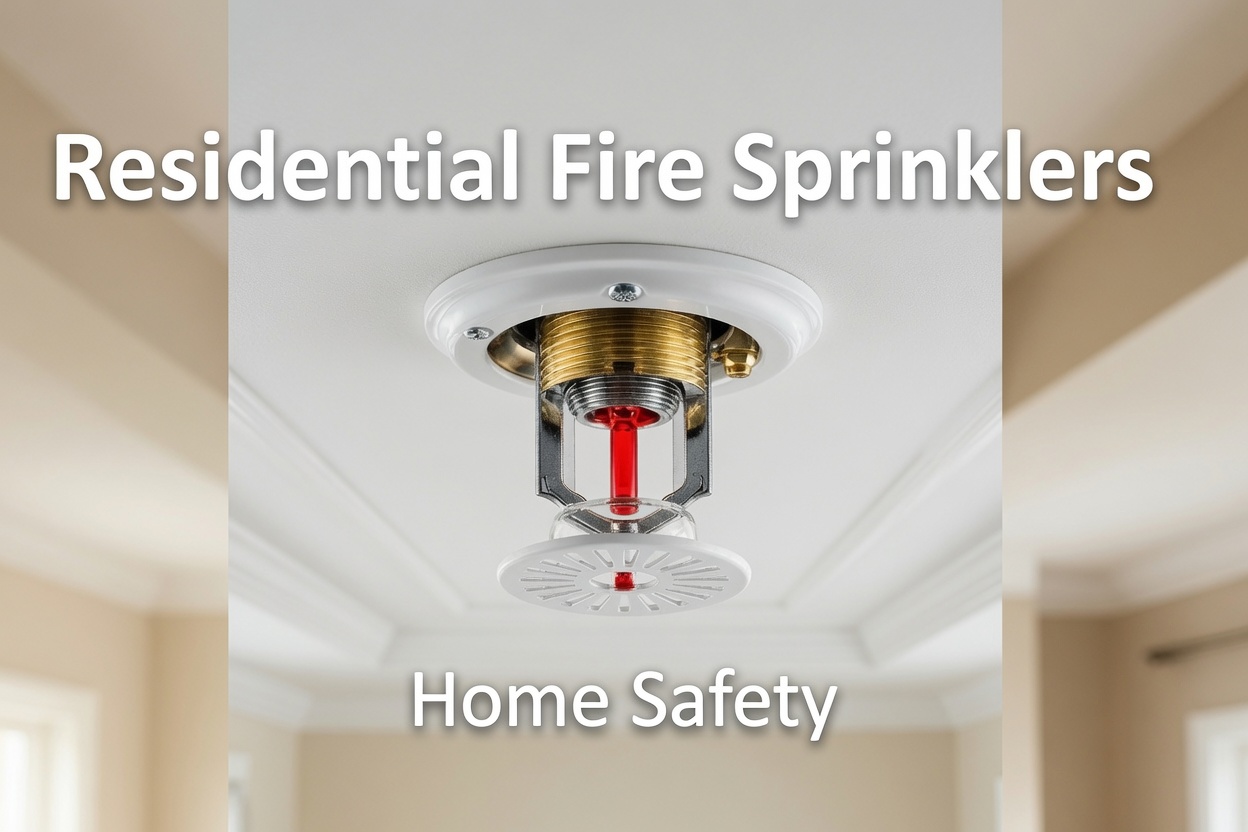
Residential Fire Sprinkler Systems: What Every Home Buyer and Homeowner Should Know
If you're looking to buy a townhome or a property with more than 2 attached units, that home is going to be required to have a fire sprinkler system installed. Although not super common in residential homes, we will explore what these systems look like.
Why Residential Fire Sprinklers Matter
Fire sprinklers are designed to control or extinguish a fire early, giving occupants more time to escape and minimizing property damage. Unlike commercial systems, residential sprinklers are simpler and tailored for homes.
Key Limitations and General Rules
It is emphasize that homeowners and buyers should not attempt to design, install, or inspect these systems themselves. Qualified, licensed sprinkler contractors must handle the work. Here are the core installation principles:
Sprinkler systems must follow the manufacturer’s instructions precisely.
Pipes need protection from freezing (dry heads are used in unheated areas).
Damaged, painted, or caulked sprinkler heads must be replaced.
Non-metallic pipes in interior walls require proper fire-rated separation.
Never install a shut-off valve in the sprinkler piping itself.
A qualified contractor should verify water pressure and flow before installation.
Systems should cover the entire building — not just part of it.
Important note for home buyers: If a home has (or is supposed to have) sprinklers, verify from a professional that the system was installed correctly and hasn’t been modified improperly.
Where Are Sprinkler Heads Required?
Generally require sprinkler coverage throughout most living areas, with some logical exceptions for small, unoccupied spaces:
Not typically required in:
Attics, crawl spaces, and pantries (if small — often under 24 sq ft).
Closets and linen closets (limited size and no heat sources).
Bathrooms under 55 square feet.
Garages and similar areas.
Heads are required above fuel-fired appliances (furnaces, water heaters, etc.) in some cases.
Coverage is limited per head (often around 400 sq ft maximum, depending on the specific head and layout).
Sprinkler Head Types and Placement Rules
Different heads activate at different temperatures:
Standard heads: Most common, activate between 135°F–170°F.
Intermediate heads: Used near heat sources (fireplaces, stoves, HVAC equipment, lights) — higher activation temps (175°F–225°F).
Obstruction rules help ensure water can reach the fire effectively:
Ceiling-mounted (pendent) heads need at least 3 feet clearance from ceiling fans, light fixtures, or similar obstructions.
Wall-mounted heads require at least 5 feet clearance.
Additional heads can sometimes be added to compensate for obstructions.
These spacing and clearance rules are critical for proper system performance.
What This Means for You as a Homeowner or Buyer
During a professional home inspection, we look for visible signs of sprinkler systems, proper head placement, evidence of freezing risk, and any obvious modifications that could compromise safety.
Homebuyers: Ask about the age of the system, maintenance history, and whether it was permitted and inspected. An improperly installed or disabled system can create serious liability and safety issues.
Current homeowners: Never paint sprinkler heads, store items too close to them, or tamper with the system. Have a qualified professional inspect and maintain it periodically.
Local Building Codes and Your Area
Fire sprinkler requirements are highly local. What’s required in one city or county may differ from neighboring areas. Ask before you build or renovate if fire sprinklers are involved.
Need a Home Inspection in DFW?
Contact us today at (817) 518-2220 or book online at FisherHomeInspections.com
— Kyle Fisher, Professional Home Inspector
Keller, Texas
Residential Code References
The fire sprinkler standards listed above are from P2904 of the International Residential Code (IRC) 2021.