Garage Doors: What Fort Worth Homeowners & Home Buyers Need To Know
Garage doors are one of the largest and heaviest moving parts of a home. A typical residential garage door can weigh 100–400+ pounds and is under constant spring tension. When something goes wrong, the results can range from inconvenient (a door that won’t open) to dangerous (a spring that fails or a door that comes off its tracks).
As a professional home inspector serving the DFW metroplex—including Haslet, Fort Worth, Justin, and surrounding Tarrant County communities—I see garage door issues on a regular basis. Here’s a practical, educational overview of what every homeowner and home buyer in North Texas should understand.
What Counts as a Garage Door?
A garage vehicle door is the large door designed for cars, trucks, or other vehicles.
Standard residential sizes are:
Single doors: 8 or 9 feet wide
Double doors: 16 or 18 feet wide
Height: usually 7 feet (taller doors are available by adding panels)
Most modern doors are sectional (5–8 panels roughly 18 inches tall that roll up on tracks). Older homes may still have single-panel tilt-up doors. Roller/rollup doors are more common on commercial buildings.
Materials include wood (heavier, often 200–400+ lbs), steel or aluminum (lighter, around 100–200 lbs), and less commonly vinyl or fiberglass. All of them rely on springs to counterbalance the weight.
Two Types of Springs (and Why They Matter)
There are two main spring systems:
Torsion springs (most common today) – One spring mounted above the door near the center on a torsion shaft.
Extension springs – Two springs, one above each horizontal track.
Both types are under significant tension, especially when the door is closed. Extension springs should have a containment cable that runs through the spring and attaches to the track supports. This cable is a critical safety feature—if the spring breaks, the cable helps keep it from flying loose and causing injury.
Important safety note: Homeowners should never attempt to adjust, repair, or replace garage door springs. The stored energy is dangerous. Always hire a qualified technician.
Weather stripping should be present at the bottom and sides. A perfectly weather-tight seal is not always expected, but large gaps or missing seals allow pests, water, and debris inside.
Proper Installation Requirements
Tracks and torsion springs must be attached to solid framing—not drywall or other finish materials. Wood bucks (back jambs) are typically installed around the opening to provide a solid attachment point for the door, springs, and operator. These bucks should also be fastened to framing, not just finish materials.
Sectional door springs are adjusted so the door stays in position when raised about four feet off the floor. Checking this properly requires disconnecting the door from the operator. Worn or improperly adjusted springs are a common defect.
Typical Defects Home Inspectors Report
Common issues I note during inspections in the DFW area include:
Missing or damaged containment cables on extension springs
Worn, stretched, or broken springs
Damaged, bent, or misaligned tracks
Missing or damaged weather stripping
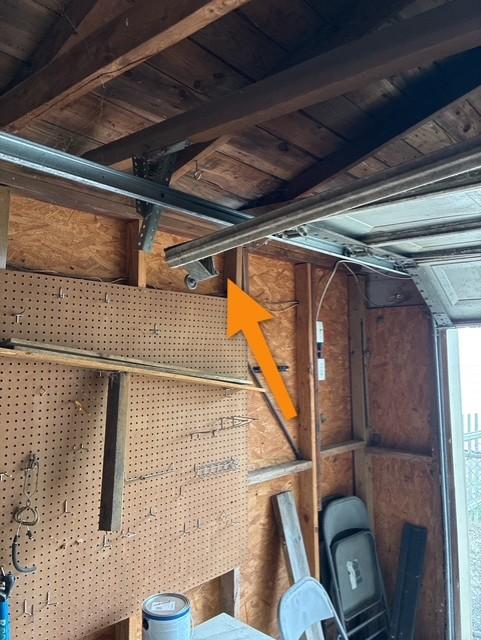
Lack of proper rear track bracing on high ceilings
Manual lock or pull-rope still in place after an automatic opener was installed (these can create safety and operational problems)
What Home Buyers Should Pay Attention To
When you’re buying a home in Keller, Fort Worth, Argyle, or anywhere in North Texas, ask your inspector to carefully evaluate the garage door system. Pay special attention to:
Overall balance and operation of the door
Presence of safety features on the automatic opener (photo eyes, auto-reverse)
Condition of weather seals and bottom section
A door that is hard to lift by hand, binds in the tracks, or has visible spring damage is worth addressing before closing—or at least budgeting for repair.
Practical Takeaways for Homeowners
Test the door’s balance occasionally (with the opener disconnected) by lifting it halfway—it should stay in place.
Keep the tracks clean and the rollers lubricated per manufacturer recommendations.
Never stand under a garage door while it’s moving.
If you hear unusual noises, see frayed cables, or notice the door struggling, call a professional promptly.
When an automatic opener is installed, remove or disable any manual locking mechanisms and pull ropes that could create hazards.
Garage doors are a critical safety system in your home. Understanding the basic components and common failure points helps you maintain them properly and avoid expensive or dangerous surprises.
Ready to schedule a home inspection?
Contact us today at (817) 518-2220 or book online at FisherHomeInspections.com. Whether buying, selling, or maintaining your current home, we’re here to help keep your family safe.
— Kyle Fisher, Professional Home Inspector
serving all of DFW and North Texas