Proper Gas Piping: Sediment Traps, Shutoff Valves & Flexible Connectors; What Every Homeowner Should Know
Why Gas Piping Should Be on Every Homeowner’s Radar
Natural gas is one of the most convenient and efficient energy sources in our homes — powering furnaces, water heaters, stoves, fireplaces, and dryers. But with convenience comes responsibility. Improperly installed or maintained gas piping can lead to leaks, inefficiency, or even dangerous situations.
As professional home inspectors, we thoroughly evaluate fuel gas systems during every inspection. Here’s what we look for and why these components are so important for your family’s safety and your home’s longevity.
Sediment Traps (Drip Tees): Your First Line of Defense Against Moisture and Debris
What is a sediment trap?
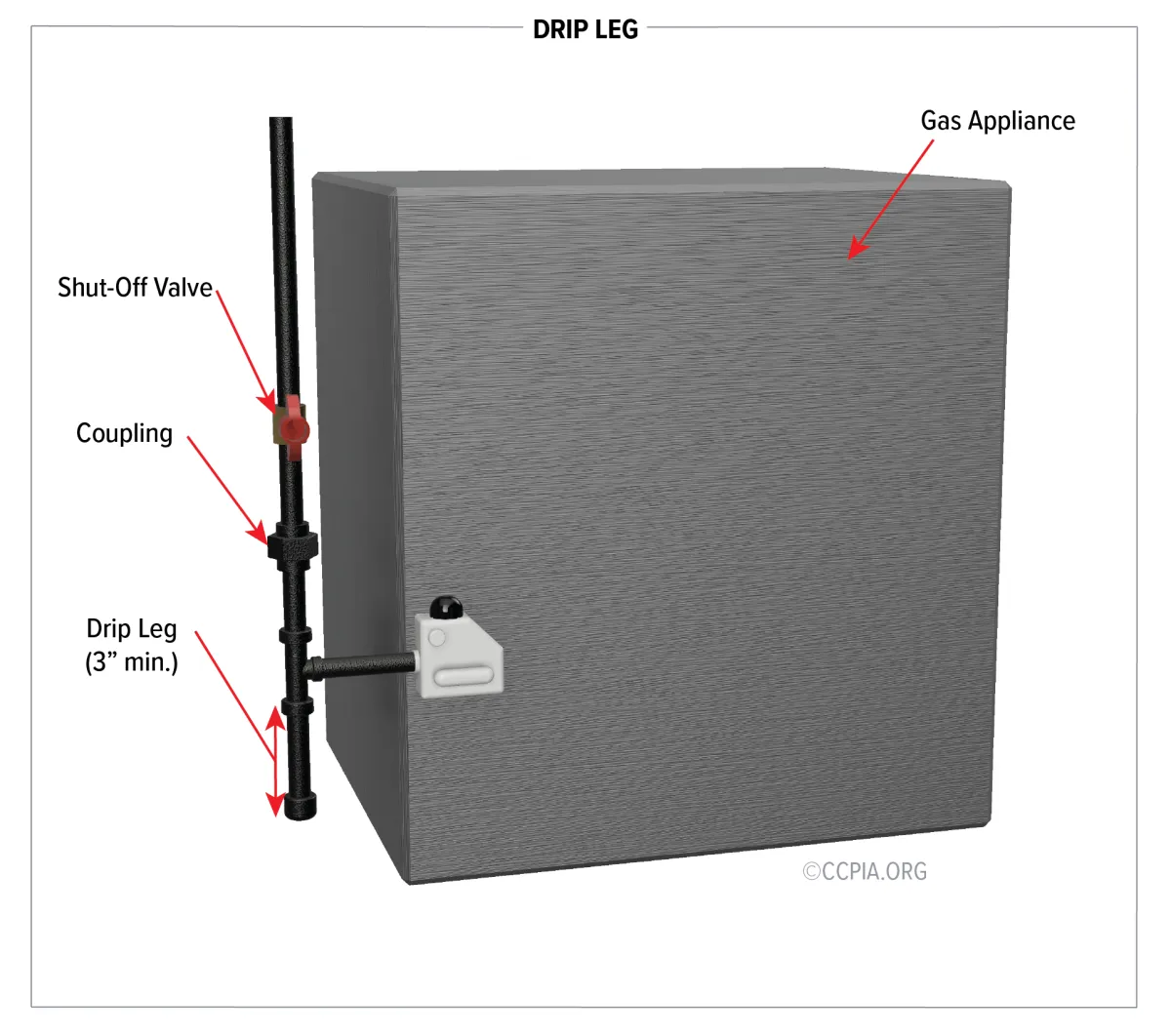
A sediment trap (also called a drip tee or drip leg) is a short vertical section of pipe with a capped nipple at the bottom. It’s installed right before a gas appliance to catch moisture, rust, scale, and debris before they reach the appliance’s controls or burners.
Why it matters:
Moisture in gas lines can damage valves and cause malfunctions.
Debris can clog small orifices in modern high-efficiency appliances.
What we look for during inspections:
We check that a sediment trap is present, properly oriented, and accessible for cleaning. Missing or improperly installed traps are surprisingly common in older homes or DIY modifications.
Homeowner Tip: Never remove or bypass a sediment trap. If you’re replacing an appliance, make sure your contractor installs one according to code.
Gas Shutoff Valves: Quick and Safe Access in an Emergency
Every gas appliance should have its own accessible shutoff valve. These valves allow you (or emergency responders) to quickly cut off the gas supply to a specific appliance without shutting down the entire house.
Key requirements we verify:
The valve must be in the same room as the appliance it serves.
It should be within 6 feet of the appliance and easily reachable.
It cannot be hidden behind the appliance or in a concealed location.
During inspections, we frequently find valves that are buried behind finished walls, painted over, or located too far away — all of which create safety hazards.
Flexible Gas Connectors: Do’s and Don’ts
Flexible connectors make appliance installation easier, but they have strict rules:
Best Practices:
Use only approved, labeled flexible gas connectors.
Never reuse an old connector when replacing an appliance.
Keep them short (usually no more than 6 feet).
Allow slight slack for movement — but avoid sharp bends or kinks.
Never install them through walls, floors, or ceilings.
Never bury them in concrete or conceal them.
We often see flexible connectors that are overly tight, overly bent, or improperly routed — conditions that can lead to stress fractures and leaks over time.
What This Means for Home Buyers and Homeowners
When buying a home, a thorough professional home inspection can identify these gas system issues before they become expensive or dangerous problems. For current homeowners, annual visual checks and professional servicing of gas appliances are smart preventive steps.
Warning signs to watch for:
Strong gas odor
Soot around appliance vents
Older flexible connectors (especially pre-2000 models)
Appliances that frequently shut off or won’t ignite properly
Understanding these components helps you ask the right questions when working with contractors or evaluating a potential new home. However, nothing replaces the trained eye of a licensed home inspector.
Have questions about your gas appliances?
Fisher Home Inspections proudly serves Keller, Texas and surrounding areas. Our thorough inspections include detailed evaluation of the gas appliances so you can have confidence in your home purchase or maintenance decisions.
— Kyle Fisher, Home Inspector
Keller, Texas
Ready to schedule your home inspection?
Contact us today at (817) 518-2220 or book online at FisherHomeInspections.com
Residential Code References
The gas appliance standards listed above are from G2419, G2420, and G2422 of the International Residential Code (IRC) 2021.