Understanding Home Exhaust Systems: Dryer Vents, Kitchen Hoods & General Exhaust Requirements
If you’re a homeowner or home buyer, exhaust systems probably aren’t the first thing on your mind when you walk through a house. But poor dryer vents, kitchen range hoods, and bathroom exhausts are among the most common issues home inspectors flag — and they can lead to serious fire hazards, moisture problems, mold, and higher energy bills.
Proper exhaust systems are required by building codes (based on the International Residential Code) to keep your home safe and healthy. In this guide, we’ll walk you through the key rules for clothes dryer exhaust systems, kitchen range hoods, and general exhaust duct termination. We’ll also share what home inspectors look for and simple tips you can use right now.
1. Clothes Dryer Exhaust Systems: The #1 Fire Hazard in Many Homes
Clothes dryers move a lot of hot, lint-filled air. If the duct isn’t installed correctly, lint builds up fast and can ignite — dryer fires are surprisingly common.
Key Code Requirements (Simplified):
Duct material: Must be 4-inch diameter smooth-wall metal duct (at least 28 gauge). Flexible “accordion-style” duct is only allowed for the short transition piece between the dryer and the rigid duct — and even then, only up to 8 feet total.
Duct length: Maximum 35 feet from the dryer to the outside termination. Every 90° elbow costs you 5 feet; every 45° elbow costs 2½ feet. If the run is longer than 35 feet, the dryer won’t dry properly and lint buildup skyrockets.
Transition duct rules: One-piece only, maximum 8 feet, metal only (plastic-coated is a fire hazard), and it cannot run through walls, floors, ceilings, or attics.
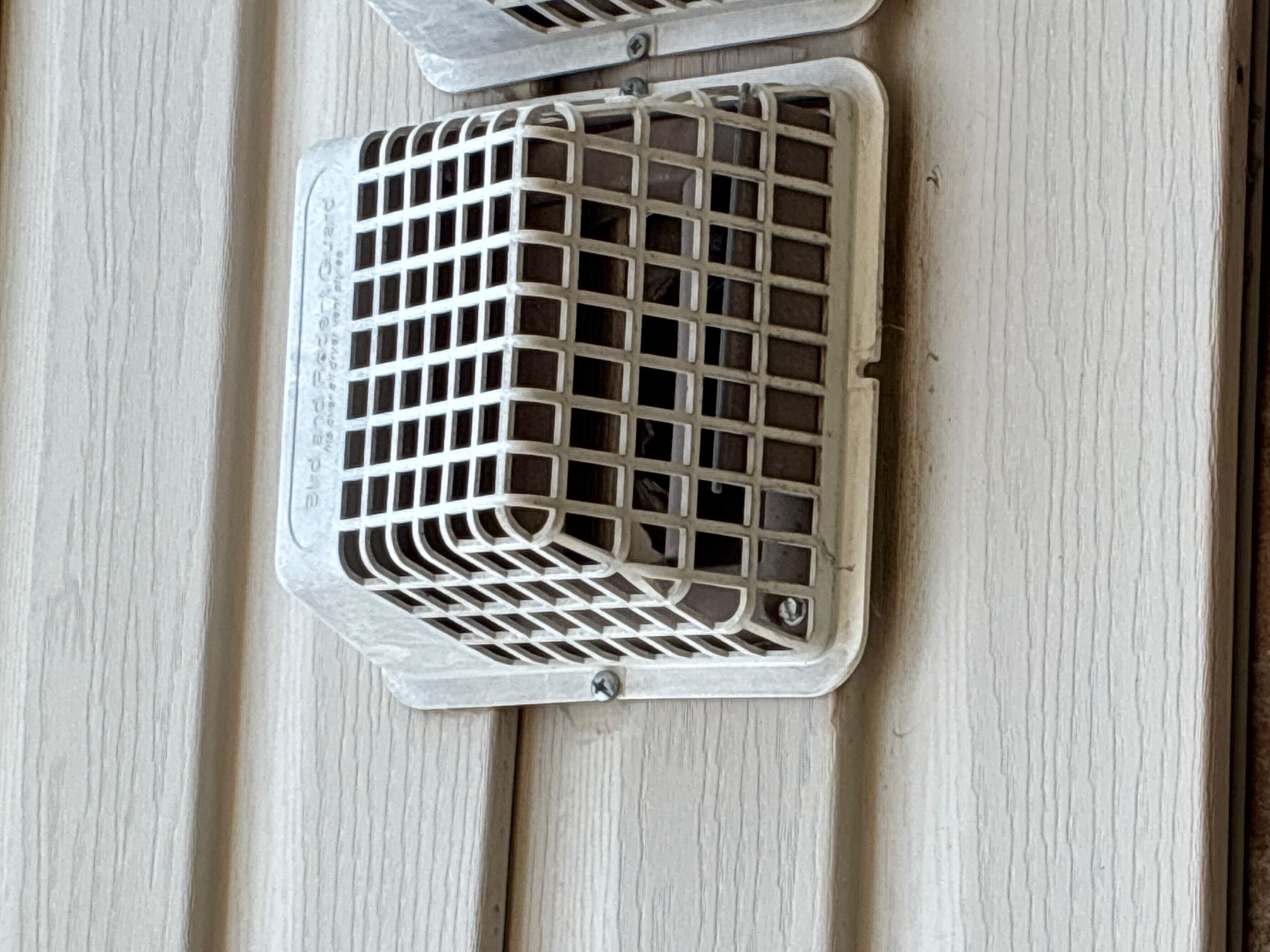
Termination: Must exit directly outdoors — never into an attic, crawl space, garage, or soffit. It needs a backdraft damper and a termination hood. NO SCREENS (they trap lint) allowed on the dryer termination.
Common mistakes inspectors see:
Flexible duct crushed or run through the attic
Ducts vented into the crawl space, behind a wall, or in the attic
Too many elbows making the total run way over 35 feet
Termination too close to windows, doors, or HVAC condenser
2. Kitchen Range Hoods & Exhaust Systems
Kitchen exhausts remove grease, smoke, and moisture. While a recirculating (filter-only) hood is allowed in some cases, code strongly recommends an externally ducted system.
What the code wants:
Ducts should be smooth-wall galvanized steel, stainless steel, or copper — air-tight to prevent grease from leaking into walls.
Termination outdoors with a backdraft damper.
Many newer homes have the damper built into the hood or microwave.
Pro tip for buyers: If the kitchen has a fancy-looking hood but no visible duct going outside, it’s probably recirculating. Great for looks, not so great for air quality when you’re cooking with gas or frying.
3. General Exhaust Duct Termination Rules (Bathrooms, Laundry, Kitchens)
All exhaust ducts (dryer, bath fans, range hoods) follow these safety rules:
Must terminate directly outdoors — not into attics, soffits, or crawl spaces.
At least 3 feet from windows, doors, and operable openings.
At least 10 feet horizontally (or 3 feet vertically) from any HVAC intake or combustion-air opening.
Covered with corrosion-resistant material that has openings between ¼ inch and ½ inch.
Protected from water infiltration.
Why Proper Exhaust Systems Matter to You
Fire safety — Lint + heat = potential disaster.
Indoor air quality — Exhaust removes moisture, grease, and odors that cause mold and poor air.
Energy efficiency — A restricted dryer vent makes your dryer run longer and use more electricity.
Home value — Buyers and inspectors notice these issues immediately. Fixing them before listing can prevent price reductions or repair requests.
Home Inspection Checklist for Buyers & Sellers
When you walk through a house (or prepare to sell), look for:
Is the vent termination broken or missing?
Does the vent hood outside actually open and close properly?
Any signs of lint buildup around the dryer or outside termination?
Is the kitchen hood ducted to the outside?
Any flexible duct visible attic or laundry room?
Bottom line: These requirements are there to keep your family safe and your home in good shape for years.
At Fisher Home Inspections in Fort Worth, Texas, we check every exhaust system thoroughly during every inspection. If you’re buying or selling a home, we’ll give you a clear, easy-to-understand report so you know exactly what needs attention.
Ready for peace of mind? Schedule your home inspection today and let us make sure your exhaust systems are working the way they should.
Residential Code References
The exhaust ventilation standards listed above are from M1204.3, M1502, M1503, G2439 R303.5, R303.6 of the International Residential Code (IRC) 2021.