Pool Bonding vs. Grounding: What North Texas Homeowners & Homebuyers Need to Know
If you own a home with a pool, buying a home with a pool, or building a pool, today's topic is for you. Water and electricity are required for a working pool. And we all know that those two things don't mix well. An important part of your pool that keeps you safe from shock is the bonding and grounding systems. Let's break down what bonding and grounding actually do and why they're both important.
What Is Pool Bonding?
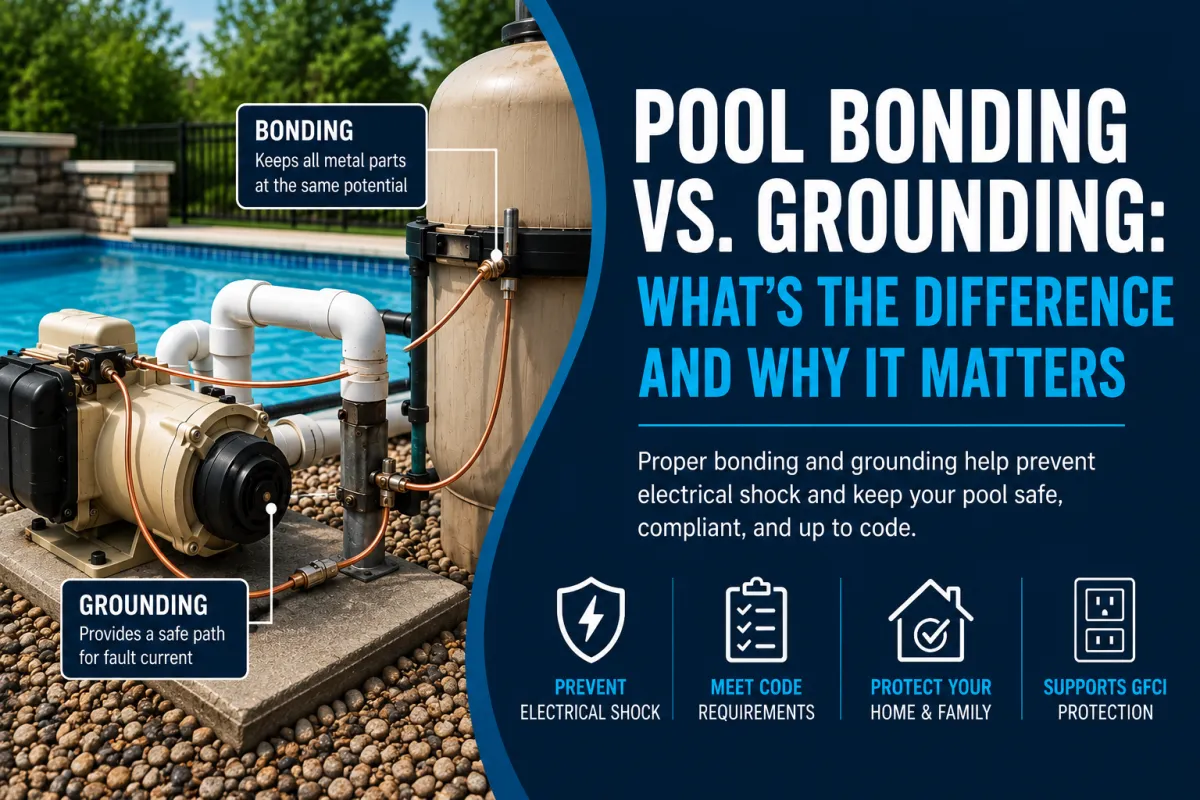
Pool bonding is the process of connecting all metal components around a swimming pool together using a solid copper bonding wire (typically #8 AWG copper).
The purpose is simple:
Keep every conductive metal object at the same electrical potential.
If a piece of equipment accidentally becomes energized, bonding helps prevent dangerous voltage differences between metal objects that someone could touch at the same time.
Think of bonding as creating one large electrical "team." Every metal component is connected together so none of them develops a dangerous voltage difference.
What Gets Bonded?
Most homeowners are surprised by how many components require bonding.
A properly bonded pool may include:
Pool pump motor
Pool heater
Metal light niches
Metal ladders and handrails
Diving boards with metal supports
All Metal within 5 feet of the pool and up to 12 feet high
Metal conduit and junction boxes
Metal piping
Reinforcing steel (rebar) in concrete pools
Conductive pool deck surfaces
The pool water itself (through an approved water bonding fitting)
All of these components are connected together with a continuous bonding conductor.
What Is Pool Grounding?
Grounding serves a different purpose.
Instead of connecting metal parts together, grounding connects electrical systems to the earth.
Its purpose is to provide a low-resistance path for electrical fault current. If a piece of equipment becomes energized due to an electrical fault, the grounding system helps protective devices, such as circuit breakers, operate quickly to disconnect power.
Unlike bonding, grounding is focused on protecting electrical equipment and helping clear electrical faults.
Why Bonding Is So Important
Imagine you're standing in a pool.
One hand touches a metal ladder while your feet are in the water.
If the ladder and the water are at different electrical voltages, your body can become the path that electricity takes.
Even relatively small voltage differences can be dangerous in wet environments.
Bonding minimizes this risk by keeping conductive components at the same electrical potential.
Common Problems Home Inspectors Find
During a home inspection, we often observe issues such as:
Missing bonding wires at pool equipment
Corroded or broken bonding clamps
Equipment replacements that were never re-bonded
Loose bonding connections
Missing water bonding fittings
Damaged or disconnected bonding conductors
Missing GFCI protection
Improper grounding of electrical equipment
Many of these issues occur after repairs or equipment upgrades, when bonding wires are accidentally left disconnected.
Can You See Pool Bonding?
Sometimes.
You may notice a bare solid copper wire attached to:
The pool pump motor
Pool heater
Metal piping
Bonding clamps
Metal pool components
However, much of the bonding system is hidden underground or encased in concrete.
This is why a visual inspection has limitations, and why some electrical safety concerns may require evaluation by a licensed pool electrician.
What About Above-Ground Pools and Spas?
Above-ground pools, hot tubs, and spas often have bonding requirements as well.
Requirements vary depending on:
Construction materials
Whether the unit is portable or permanently installed
Electrical equipment
Metal components nearby
Even if a spa appears to be "plug-and-play," proper electrical installation and GFCI protection remain essential.
What Home Buyers Should Know
If you're buying a home with a pool:
Ask when the pool equipment was last replaced.
Look for missing or disconnected bonding wires around the pump and heater.
Verify GFCI protection is present.
Have the pool professionally inspected if there are concerns about electrical safety.
Understand that a standard home inspection is primarily visual and cannot verify every concealed bonding connection.
Electrical safety around pools is one area where small defects can have significant consequences.
Frequently Asked Questions
Is pool bonding required?
Yes. Modern electrical standards require bonding for most permanently installed swimming pools, spas, and hot tubs to reduce the risk of electric shock.
Is bonding the same as grounding?
No. Bonding equalizes electrical potential between conductive objects, while grounding provides a safe path for fault current back to the electrical system.
Can I inspect the bonding system myself?
You can visually look for obvious missing or disconnected bonding wires, but much of the bonding system is concealed. A licensed electrician or qualified pool professional can perform a more thorough evaluation.
Can missing bonding be dangerous?
Yes. Improper bonding may increase the risk of electrical shock if a fault occurs in pool equipment or nearby electrical systems.
Final Thoughts
A swimming pool should be a place to relax—not a source of electrical hazards. While bonding and grounding work behind the scenes, they are two of the most important safety systems protecting everyone who uses the pool.
If you're buying a home with a pool or already own one, it's worth having the electrical components inspected whenever equipment is replaced or if any safety concerns arise.
At Fisher Home Inspections, we perform thorough visual inspections of pool equipment and identify visible electrical safety concerns so you can make informed decisions about your home.
Ready to schedule a home inspection?
Contact us today at (817) 518-2220 or book online at FisherHomeInspections.com. Whether buying, selling, or maintaining your current home, we’re here to help keep your family safe.
— Kyle Fisher, Professional Home Inspector
serving all of DFW and North Texas
Residential Code References
The pool bonding and grounding standards listed above are from E4204 and E4205 of the International Residential Code (IRC) 2021.