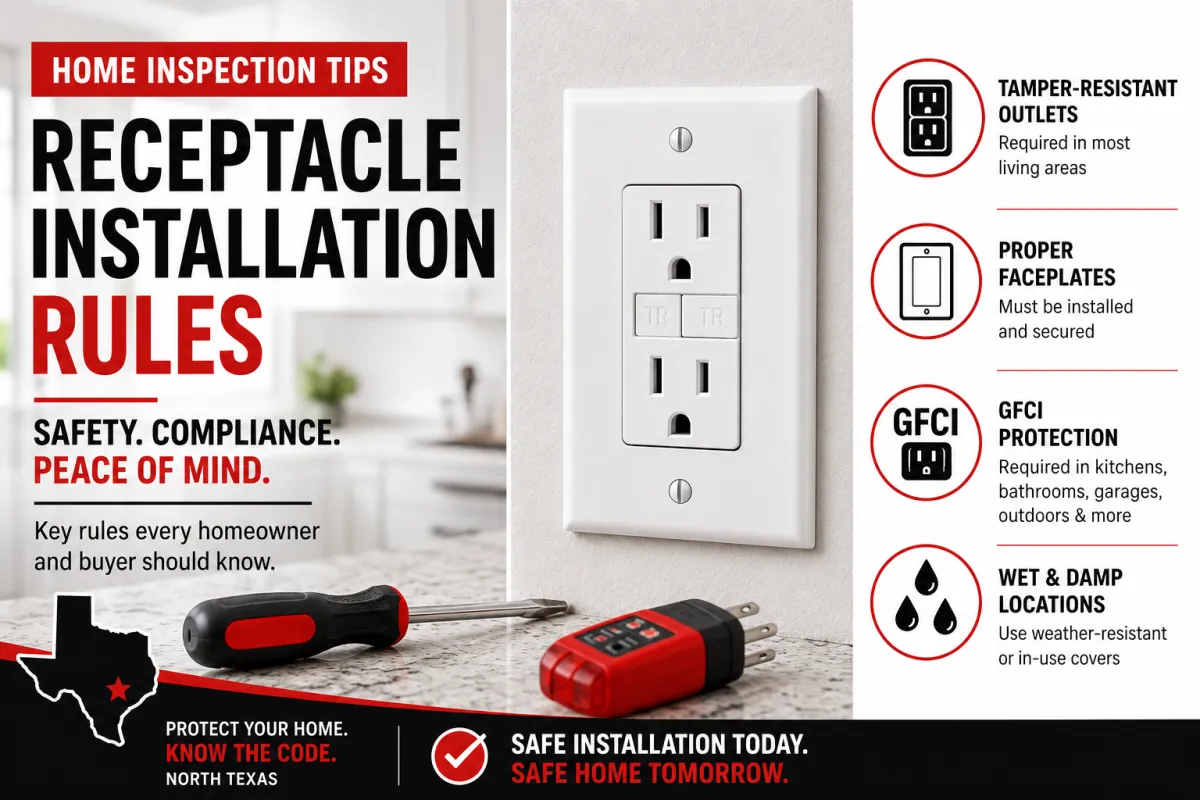
Receptacles: What Homeowners and Buyers Need to Know for Electrical Safety
Electrical receptacles (outlets) are among the most used features in any home, yet many homeowners and home buyers overlook their importance until a problem arises. Improper installation can lead to fire hazards, or shock risks.
Whether you're maintaining your current home or evaluating a property for purchase, understanding these requirements helps you spot potential problems early.
Tamper-Resistant Receptacles (TR)
Modern codes require tamper-resistant receptacles on most 120-volt, 15- and 20-amp general-purpose circuits in homes. These outlets have internal shutters that only open when equal pressure is applied (like inserting a plug), preventing children from inserting objects.
Where Required: Interior and exterior locations, with limited exceptions (e.g., outlets higher than 66 inches from the floor or dedicated appliance outlets).
Replacements: Existing non-TR outlets can often stay during simple replacements, but upgrades are recommended for safety.
Visual Tip: Look for the “TR” marking on the outlet.
Home Inspection Insight: We check for TR receptacles in bedrooms, living areas, and accessible spots—especially important for families with young children.
Proper Mounting and Faceplate Installation
Correct installation prevents arcing, loose connections, and fire risks:
Receptacles must be securely mounted in electrical boxes, flush with the wall.
Faceplates: Must fully cover the outlet with no gaps between the plate and wall or receptacle and plate. Oversized plates can fix minor gaps.
Do not use oversized or mismatched screws that could damage the box or cause movement over time.
Common issues we see: Loose receptacles and gaps that expose wiring or allow dust/moisture entry.
Receptacles in Wet and Damp Locations
Outdoor, bathroom, kitchen, and similar areas have stricter rules:
Damp Locations (e.g., covered porches): Require weather-resistant covers that protect when closed.
Wet Locations (e.g., exposed to rain or direct water): Need “in-use” weatherproof covers that protect even when a cord is plugged in. Gaskets and seals are critical between the receptacle and wall surface.
Greater than 20 Amps in Wet Areas: Special covers and weatherproofing required.
No Outlets Directly Above Tubs/Showers: Strictly prohibited for safety.
We always test GFCI protection in these high-risk zones, as it’s required for bathroom, kitchen, garage, and outdoor receptacles.
Additional Important Rules
Current Ratings: Use properly rated receptacles for the circuit
Grounding: Most new installations require three-slot (grounding-type) receptacles. Older two-slot outlets have limited replacement options, often involving GFCI protection.
Aluminum Wiring: Special connectors and anti-oxidant paste are needed when connecting to aluminum wires.
Terminal Contact: Ensure no exposed terminals that could be touched.
Why This Matters During Home Inspections
During a professional home inspection, receptacle checks are a standard part of the electrical evaluation. We look for:
Proper GFCI/AFCI protection and functionality
Tamper-resistant compliance
Secure mounting and correct faceplates
Weatherproofing in damp/wet areas
Overall code compliance and safety hazards
For home buyers, these findings can influence negotiations or repairs. For homeowners, addressing issues proactively prevents hazards and maintains your home’s value.
Ready to schedule a home inspection?
Contact us today at (817) 518-2220 or book online at FisherHomeInspections.com. Whether buying, selling, or maintaining your current home, we’re here to help keep your family safe.
— Kyle Fisher, Professional Home Inspector
serving all of DFW and North Texas
Residential Code References
The receptacle standards listed above are from E4002 of the International Residential Code (IRC) 2021.