Roof Flashing
Proper roof flashing is one of the most important parts of a home’s weather protection system. In the DFW metroplex, where we deal with intense sun, heavy rain, hail, and temperature swings, flashing failures are a frequent source of leaks and wood rot.
As a professional home inspector serving Keller, Fort Worth, Southlake, and the surrounding North Texas area, I see flashing problems on a regular basis. Here’s a clear breakdown of the key types of roof flashing, what “good” looks like, and the common issues that show up during inspections.
Roof Penetration Flashing (Boots / Roof Jacks)
Any pipe or duct that comes through the roof — plumbing vents, bathroom exhaust, dryer vents, and fuel-fired appliance vents -- needs to be properly flashed with a roof jack/boot.
The boot must be compatible with both the pipe and the roof covering. Lower-quality boots are typically made of neoprene or thermoplastic and often last only 10–20 years. Higher-quality lead boots can last 30 years or more. Boots come in different slopes and sizes so they can match the roof pitch and the diameter of the pipe. A boot installed on the wrong slope or the wrong size is much more likely to leak.
Common problems I see inspecting roofs:
Rubber or plastic boots that have cracked, hardened, or separated from the pipe
Boots that were never installed under the shingles on the high side
Lead boots that have separated from PVC vents
Boots fasteners not sealed or missing fasteners
Appliance and Exhaust Vent Flashing
Gas appliance vents are usually flashed with galvanized or stainless steel. These should include a storm collar above the boot to help keep water from running down the pipe and into the boot. Exhaust system roof jacks (for bathroom fans, range hoods, etc.) need their flanges properly integrated into the roof covering so water sheds over them instead of under them.
Sidewall and Headwall Flashing
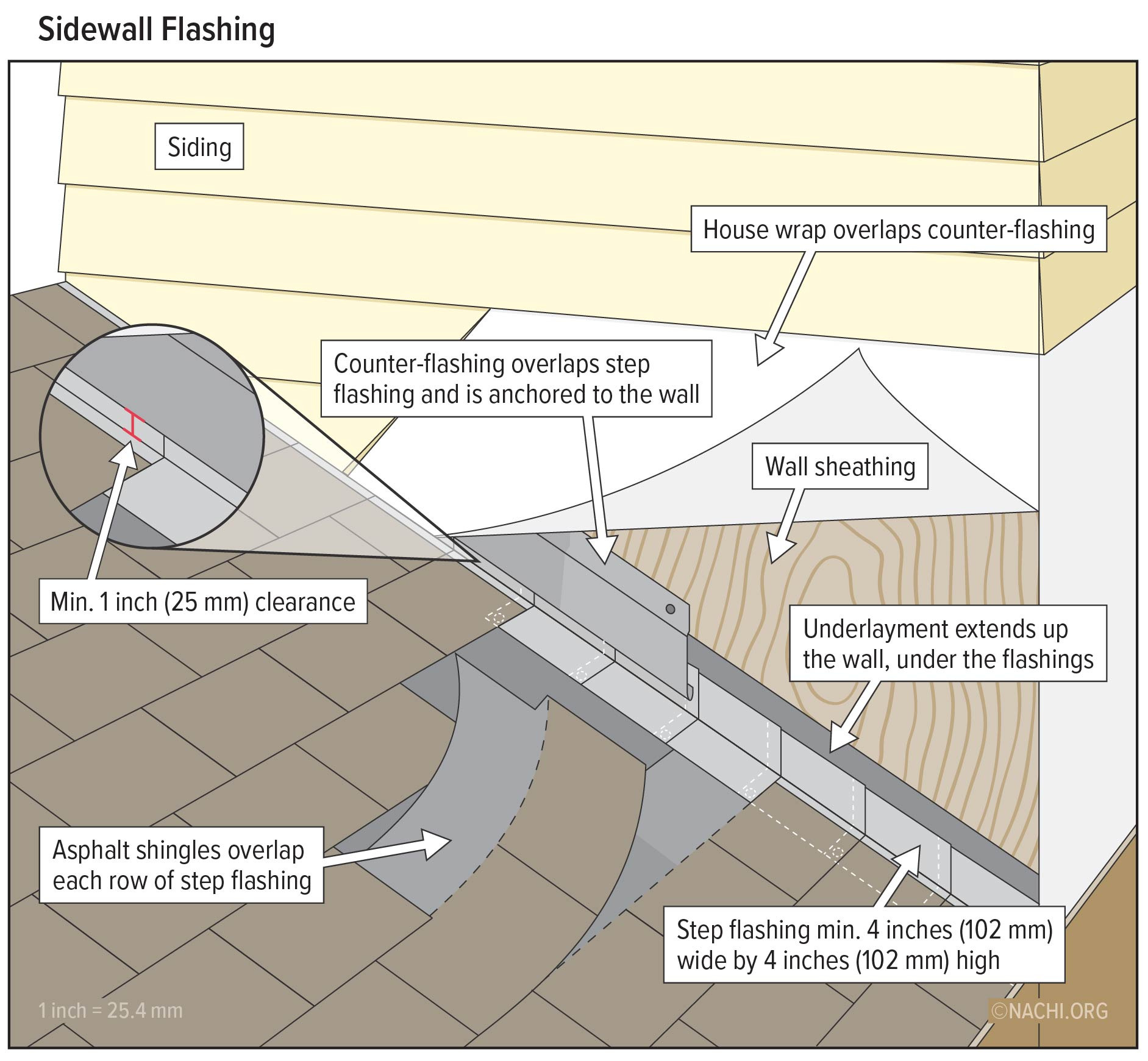
Where a roof meets a wall (sidewall or headwall), a two-part flashing system is required: base flashing and counterflashing.
Base flashing sits on the roof and turns up the wall.
Counterflashing covers the top of the base flashing and is integrated into the wall covering.
On brick or masonry walls, the counterflashing should be embedded in the mortar joint or properly sealed in a groove.
Step flashing is used along the length of the wall instead of one continuous piece in many situations.
Best practice dimensions include at least 4 inches of vertical and horizontal coverage on the base flashing and a minimum 2-inch lap of counterflashing over the base flashing. The underlayment should also be run up the wall under the flashing for an extra layer of protection.
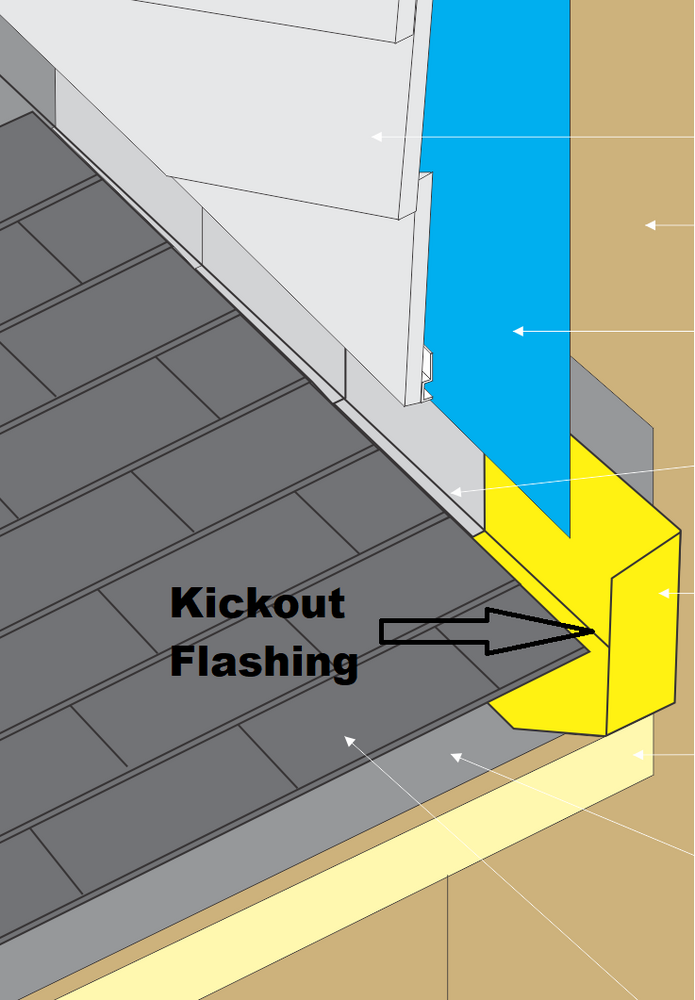
Kick-out flashing is especially important where a roof edge meets a sidewall (for example, at the end of a porch or garage roof). Kick-out flashing turns the water away from the wall so it doesn’t run down behind the siding. It is frequently missing
Why This Matters for DFW Homeowners and Buyers
In North Texas, water that gets past flashing can quickly lead to:
Rot in roof decking and wall sheathing
Damaged insulation
Interior staining and mold growth
Costly repairs that could have been avoided with proper original installation or timely replacement
When you’re buying a home, these are the kinds of details a thorough inspection catches. Many of them are not obvious from the ground and require getting on the roof (when safe) or carefully evaluating the areas around penetrations and wall intersections.
What You Can Do
If your home is more than 15–20 years old, have the roof penetrations checked. Neoprene and plastic boots are often nearing the end of their service life.
Never paint rubber boots.
When reroofing, insist that all flashing be replaced or properly reworked rather than reused, I see this happening occasionally.
On brick veneer or stucco walls, pay attention to how the counterflashing is terminated — surface-mounted pieces that rely only on caulk usually need ongoing maintenance.
If you’re buying a home in the Keller, Fort Worth, Southlake, or greater DFW area, or if you simply want peace of mind about your current roof, a professional inspection can identify these issues before they turn into bigger problems.
Ready to schedule a home inspection?
Contact us today at (817) 518-2220 or book online at FisherHomeInspections.com. Whether buying, selling, or maintaining your current home, we’re here to help keep your family safe.
— Kyle Fisher, Professional Home Inspector
serving all of DFW and North Texas