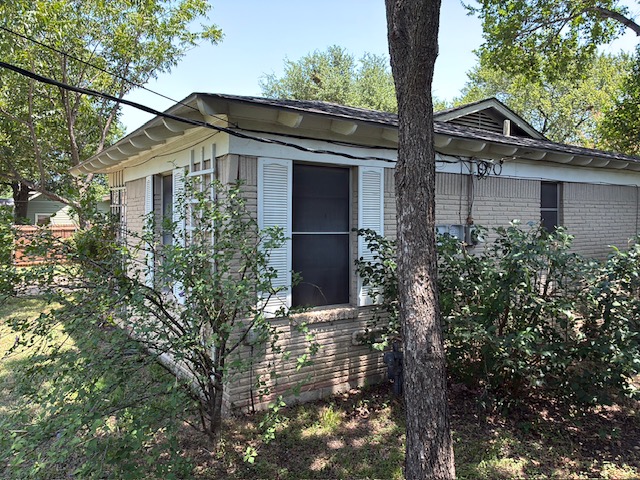
Service Drop (Main Electrical Wire) Clearances: Know the Basics For Homeowners and Buyers In North Fort Worth
Overhead electrical service drops—the wires that bring power from the utility pole to your home. Understanding the required clearances can help you spot potential problems before they become expensive repairs or safety hazards.
This guide draws from standard requirements to explain the rules in plain language. Whether you’re buying a home, selling one, or simply maintaining your property, these details matter.
What Is a Service Drop?
A service drop consists of the overhead wires running from the utility company’s pole or transformer to the point of attachment on your house (often a weather head or mast). From there, the service entrance conductors continue into your electrical panel. Clearances exist to protect people from accidental contact, prevent damage to the wires, and keep the installation safe under normal conditions and during storms or high winds.
We are not talking about underground service entrance (USE) wires that are more common in more modern homes. So if you do not see any wires hanging above the ground over your yard, then your service wires are buried under the ground.
Clearances Above Ground
Vertical clearance is measured from the lowest point of the wires (frequently the drip loop) down to the surface below:
At least 10 feet above finished grade, walkways, or areas accessible only to pedestrians.
At least 12 feet above residential driveways.
At least 18 feet above public streets, alleys, roads, or parking areas subject to truck traffic.
These heights help prevent contact with vehicles, people, and equipment. A service drop that sags too low—especially near a driveway or sidewalk—creates an immediate safety concern and can be a common find during home inspections of older homes.

Clearances to Decks, Porches, Stairs, and Openings
Service drop and service entrance wires (when they consist of individual conductors not protected by a raceway or outer jacket) must maintain at least 3 feet of clearance from:
Porches, decks, stairs, ladders, fire escapes, and balconies
Sides of doors
Sides and bottoms of operable windows (clearance is not required to the tops of operable windows, even if the top sash opens)
Clearances Above Roofs
8 feet vertical clearance above a roof that is not designed for pedestrian traffic and has a slope less than 4:12.
3 feet vertical clearance is often allowed when the service voltage is under 300 volts and the roof is guarded or isolated, or when the roof slope is 4:12 or steeper.
10 feet above roofs designed for pedestrian traffic such as rooftop decks.
Attachment, Support, and Installation Details
Attach the service drop to the building at least 10 feet above finished grade and high enough to maintain the required clearances for the full length of the run.
Use only approved, adequately strong fittings and hardware.
Do not attach antennas, satellite dishes, flags, or unrelated guy wires to the service mast. The mast is designed only for the service conductors and its own guy wires.
Form drip loops on each service wire so water runs off away from the service head or weather head.

Drip Loop Install a listed wet-location service head or gooseneck. Position it so condensation drains before reaching the panel. Locate the attachment point above the service head when possible (with limited exceptions up to 24 inches).
Protect above-ground service entrance cable in approved conduit or tubing where it is subject to physical damage (near driveways, walkways, doors, shutters, or awnings). Use sunlight-resistant cable if exposed to direct sun.
Hot (ungrounded) conductors must be insulated with approved materials. Neutral conductors have more flexible rules when part of a cable assembly or properly protected.
Why These Rules Matter for Homeowners and Buyers
Low or improperly located service drops are frequent inspection findings. Common issues include:
Wires hanging too close to a deck, balcony, or operable window
Insufficient height over a driveway or walkway
Drip loops missing or touching the roof
Service masts not properly connected
Inadequate clearance over low-slope roofs
These conditions can lead to physical damage to the conductors, increased risk of electrical shock, or the need for utility company work to raise or relocate the drop. During a real estate transaction, unresolved clearance problems may appear as inspection deficiencies, affect insurance underwriting, or require negotiation on repairs.
Practical Tips
Walk your property and visually check the path of the overhead wires relative to decks, roofs, driveways, and windows.
Note any low-hanging sections, especially after storms or if vegetation has grown into the wires.
If you are buying a home, ask your inspector specifically about service drop clearances and the condition of the point of attachment.
Never attempt to raise, move, or repair service drop conductors yourself—this work belongs to the utility company or a qualified electrician working under utility guidelines.
Keep trees trimmed away from the wires to reduce the chance of branches pulling them down.
Understanding these basic clearance rules helps you evaluate the safety and code compliance of a home’s electrical service.
If you’re preparing to buy or sell a home, or simply want peace of mind about your current property, consider scheduling a professional home inspection that includes a detailed review of the electrical service entrance and overhead clearances.
Ready to schedule a home inspection?
Contact us today at (817) 518-2220 or book online at FisherHomeInspections.com. Whether buying, selling, or maintaining your current home, we’re here to help keep your family safe.
— Kyle Fisher, Professional Home Inspector
serving all of DFW and North Texas
Residential Code References
The grounding standards listed above are from E3604 and E3605 of the International Residential Code (IRC) 2021.