Essential Guide to Smoke and Carbon Monoxide Alarms in Residential Homes: Proper Placemen and Homeowner Best Practicest
Smoke and carbon monoxide (CO) alarms are among the simplest and most effective life-safety features in any home. They provide early warning of fire or deadly invisible gas, giving you and your family precious time to escape. Whether you’re a first-time homeowner in Fort Worth or a long-time Texas resident updating an older house, understanding the current requirements can be life saving.
Why Smoke and CO Alarms Matter
Smoke alarms alert you to fires before you see or smell them.
CO alarms detect carbon monoxide produced by fuel-burning appliances (furnaces, water heaters, fireplaces, stoves) and attached garages—gases you cannot see, smell, or taste.
These devices are inexpensive and have proven effective at saving lives.
Smoke Alarm Requirements
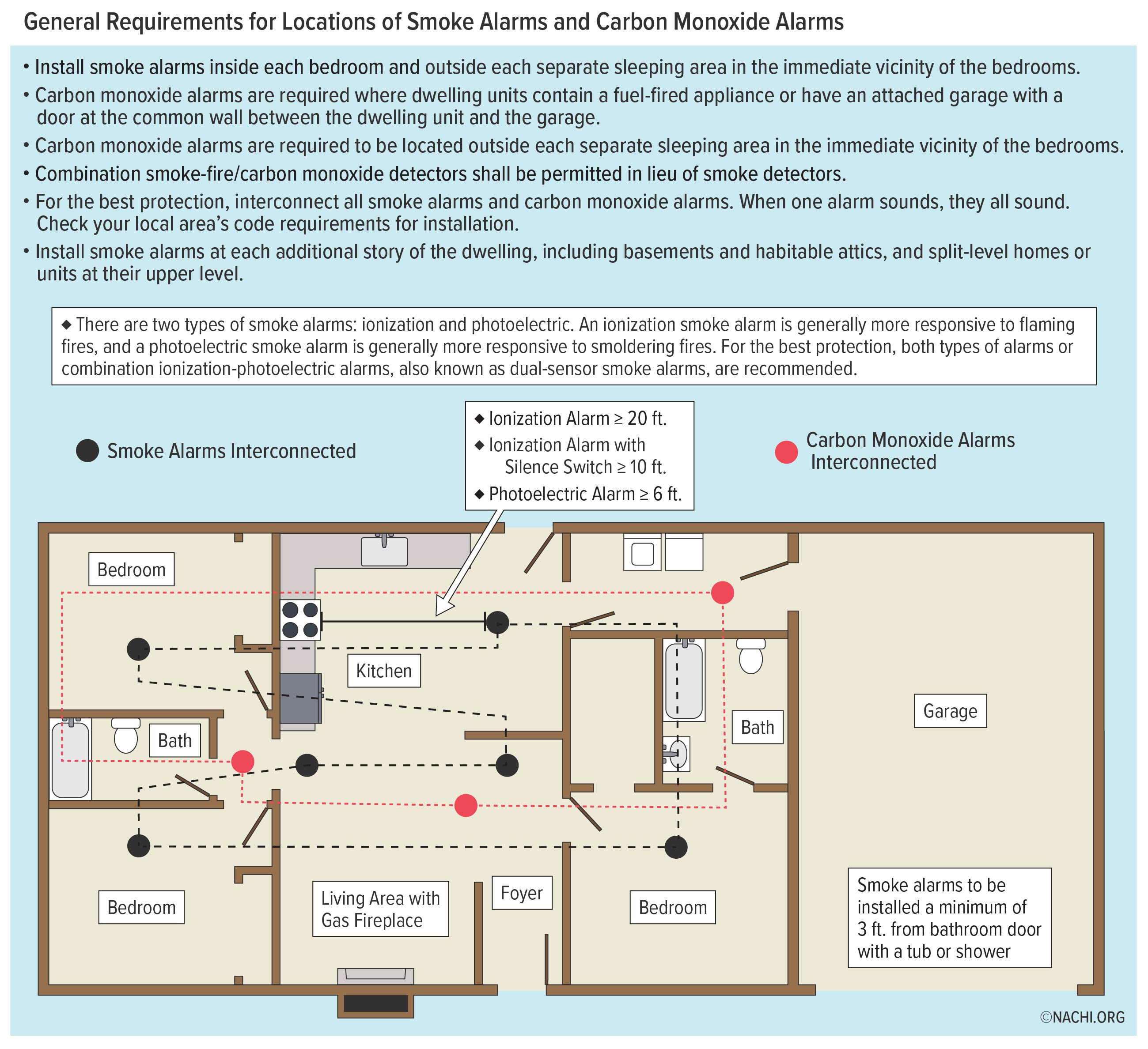
You must install smoke alarms in these locations:
Inside every bedroom.
Outside every bedroom in the immediate vicinity.
On every level of the house, including basements and habitable attics.
In and around kitchens (to prevent nuisance alarms):
Ionization-type smoke alarm should be at least 20 feet away of a cooking appliance.
Photoelectric-type smoke alarm should be at least 6 feet away of a cooking appliance.
Interconnection is required All smoke alarms must be interconnected so that when one sounds, they all sound. Most homes use hard-wired interconnections but there are newer wireless options available.
Power source
Primary power should come from the building’s electrical wiring (newer alarms have sealed batteries).
Each alarm must have a battery backup.
The circuit must have arc-fault circuit interrupter (AFCI) protection if wired.
Installation height rules
Ceiling-mounted: Place the alarm so it is at least 4 inches from the wall ceiling intersection
Wall-mounted: At least 4 inches (but no more than 12 inches) down from the ceiling/wall intersection. Manufacturer instructions always take precedence for exact mounting.
Where smoke alarms are NOT required
Crawl spaces
Uninhabitable attics
The middle level of some split-level homes (if alarms are already on the upper level and there is no door separating levels)
Two-story home quick reference (common layout most Fort Worth homes follow):
Attic – Smoke and CO alarms not required or recommended.
Second story & First story – Smoke alarms required in/near bedrooms; At least one alarm per story.
Basement – At least one; more if bedrooms are located here.
Crawl space – Not required.
Carbon Monoxide Alarm Requirements
CO alarms are required in any home that has:
Fuel-fired appliances (gas or oil furnaces, gas fireplaces, etc.)
An attached garage
Required locations:
Outside each bedroom area (within about 10 feet).
Inside any bedroom that contains a fuel-burning appliance.
Interconnect all CO alarms (hard-wired or wireless).
CO alarms must meet UL 2034 standards. A monitored carbon-monoxide system can substitute if it meets NFPA 72 and is a permanent fixture in the house.
When You Must Upgrade or Replace Alarms
During remodeling (very important for homeowners!) If you do alterations, repairs, or additions that require a permit, you must update the entire smoke and CO alarm system to current code—including hard-wiring and interconnection. Exceptions are limited (exterior work like roofing/siding, plumbing/HVAC repairs, or certain CO-alarm-only situations where wires cannot be run without major wall damage).
Best-practice replacement schedule
Replace both smoke and carbon monoxide alarms after approximately 7-10 years from the manufacture date (or sooner if the manufacturer recommends it).
The test button only checks the electronics and battery—it does not confirm the sensor is still working. Sensors can degrade after about 7 years.
Write the installation date on all new alarms with a permanent marker so you or future buyers and inspectors know the age.
Quick Visual Checklist for Homeowners
Pro Tip from a Fort Worth Home Inspector
During a professional home inspection, we check every alarm for proper location, interconnection, power source, and expiration date. Many homes—especially those built before the latest code cycles—have missing alarms, disconnected units, or alarms that are simply too old to be reliable.
If you’re buying a home in the Fort Worth area, selling, or just want peace of mind, schedule a full home inspection with us. We’ll document your smoke and CO alarm system and let you know exactly what (if anything) needs attention before you move in.
Residential Code References
The smoke and carbon monoxide alarm standards listed above are from R314 and R315 of the International Residential Code (IRC) 2021.