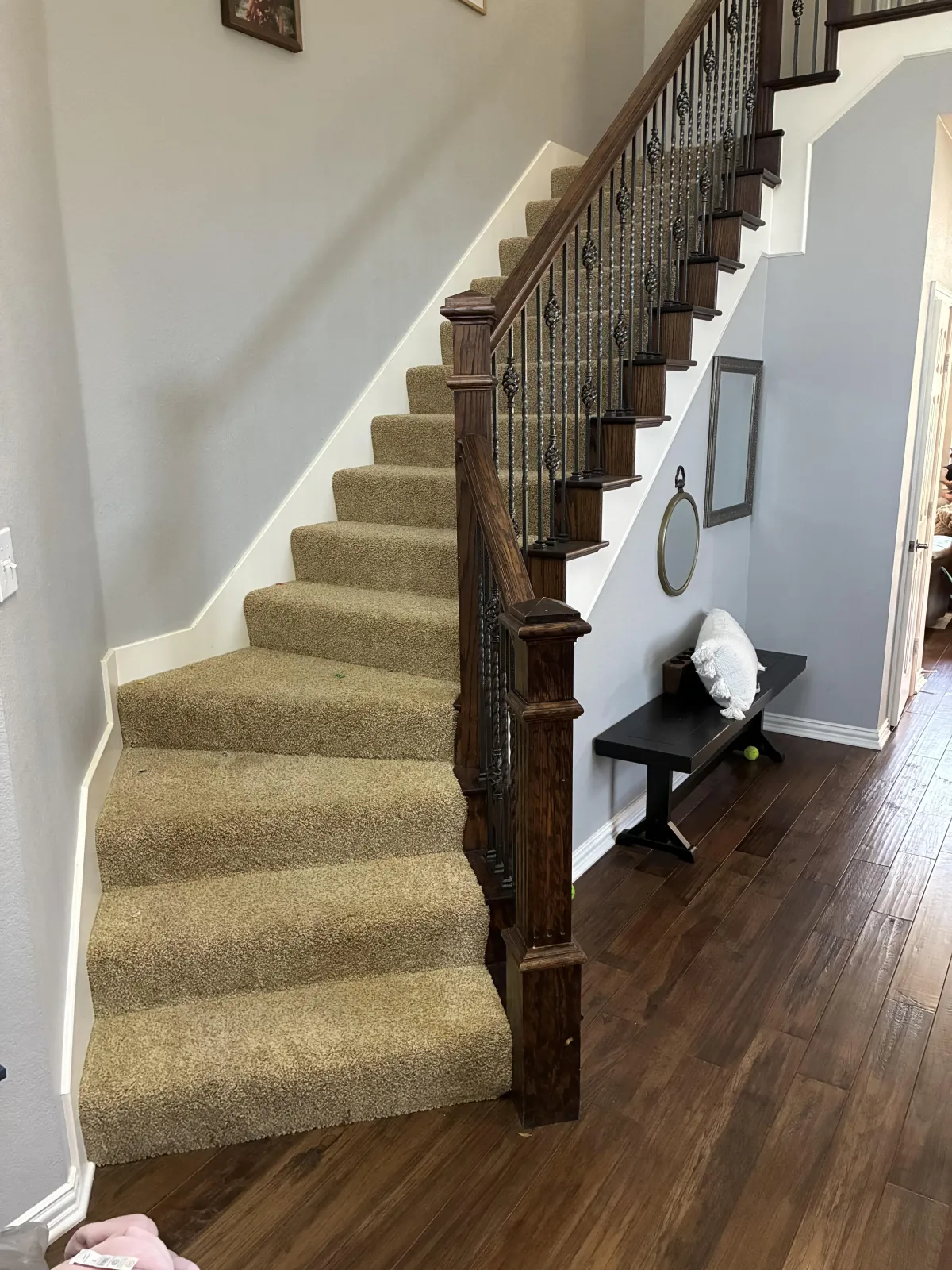
Stair Building Requirements
Stairs are one of the most used features in any home, yet they’re also one of the most common sources of trips, falls, and serious injuries. As a professional home inspector serving Fort Worth and the surrounding North Texas area, I review stairways on nearly every inspection. Many homeowners are surprised to learn that even minor deviations from building code can create hidden safety hazards.
Understanding the current building standards help you spot issues early—whether you’re a building a new home or buying a pre-existing home.
1. Stairway Width Clearances
Proper width ensures safe passage and emergency egress.
Above the handrail: Minimum finished width of ≥ 36 inches.
Between handrails (for stairs with two handrails): Minimum ≥ 27 inches.
Between handrail and wall (for stairs with one handrail): Minimum ≥ 31½ inches.
Narrower stairways can feel cramped and become dangerous during an evacuation. In older Fort Worth homes, I frequently find widths that fall short of these clearances after renovations or additions.
2. Headroom Height
You must have enough vertical clearance to walk up and down without ducking.
Minimum finished headroom: ≥ 80 inches, measured vertically from the sloped plane connecting stairs or from the finished floor of a landing.
Low headroom is especially common under dropped ceilings.
3. Riser Height & Uniformity
Risers are the vertical part of each step. Inconsistent risers are a leading cause of trips.
Maximum finished riser height: ≤ 7¾ inches.
Maximum difference between any two adjacent risers on a set of stairs: ≤ ⅜ inch.
Risers must be measured from the leading edges of adjacent treads.
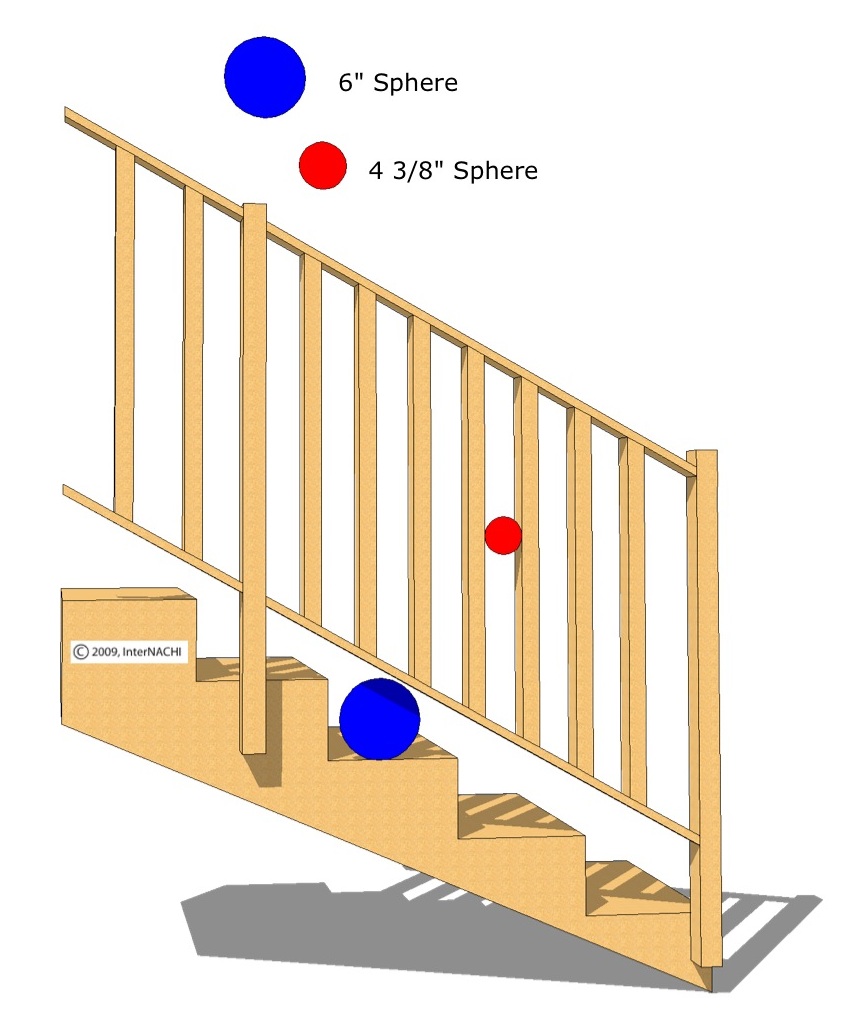
Open risers (if used) must not allow a 4-inch-diameter sphere to pass through.
A ⅜-inch variation may sound small, but it’s enough to catch a toe—especially for children, seniors, or anyone carrying items.
4. Tread Depth & Nosings
Treads are the horizontal walking surface.
Minimum finished tread depth: ≥ 10 inches, measured horizontally from the leading edge of one tread to the next.
Maximum difference in tread depth between any two treads in a flight: ≤ ⅜ inch.
Tread nosing projection: ≥ ¾ inch and ≤ 1¼ inches (for solid risers).
Insufficient tread depth forces shorter steps, increasing fall risk. I often document “uneven tread depth” in older homes during Fort Worth inspections.
5. Landings & Winders
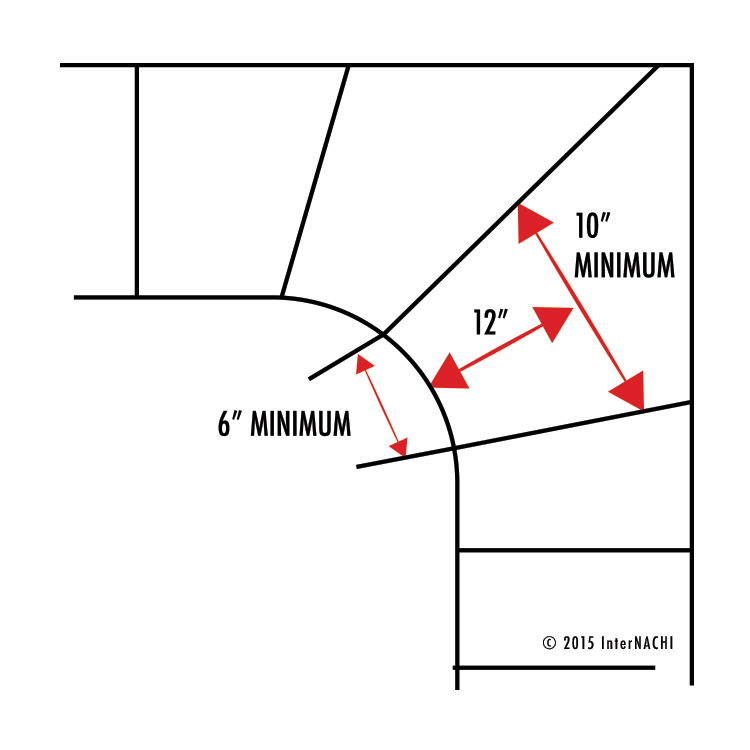
A landing is required at the top and bottom of all interior stair flights.
Rectangular landings must be at least as wide and deep as the stairway width (minimum ≥ 36 inches in each direction of travel).
For winders (turning stairs): The walkline is measured 12 inches from the inside of the turn. Minimum tread depth at the walkline is ≥ 10 inches; minimum width at any point is ≥ 6 inches.
Curved or winder stairs are popular in Fort Worth homes but must still meet these dimensional rules.
6. Handrails
Handrails provide essential support.
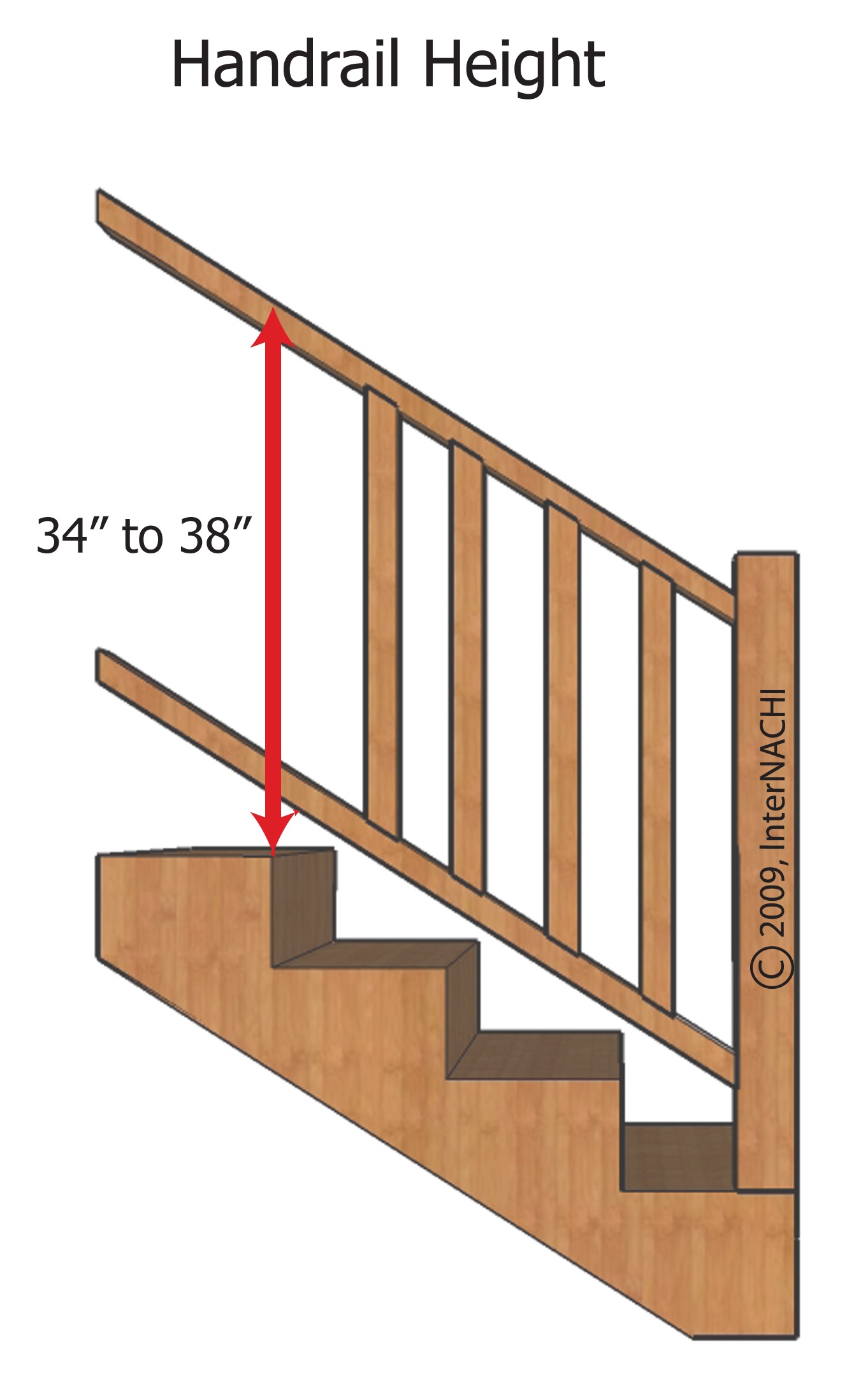
Height: ≥ 34 inches and ≤ 38 inches above the tread nosing or finished floor.
Must be continuous from the top riser to the bottom riser (with returns at ends).
Graspable shapes:
Type 1 (circular): Diameter 1¼ to 2 inches.
Type 2 (non-circular): Perimeter dimension 4 to 6¼ inches with a graspable finger recess.
Required on at least one side of every flight with four or more risers.
Missing, loose or improperly installed handrails are among the most common items I note when inspecting stairs.
7. Guards (Guardrails)
Guards prevent falls from open sides.
Minimum height: ≥ 36 inches (measured from the finished floor or tread nosing).
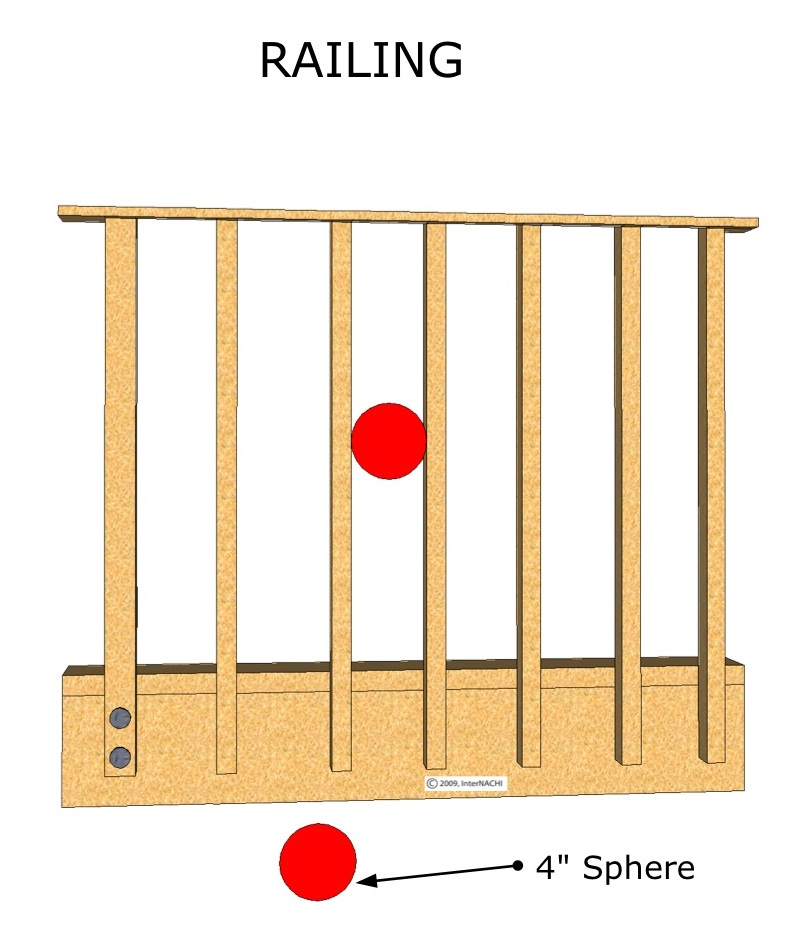
Openings (including balusters) must not allow a 4-inch-diameter sphere to pass through.
Required on any open side of stairs, landings, or walk surfaces more than 30 inches above the floor or grade.
Guard height too low or openings too wide are frequent findings in decks, porches, and split-level homes around Fort Worth.
Ready to Check Your Stairs?
Whether you’re purchasing a home in Fort Worth, Keller, Arlington, or anywhere in Tarrant County, don’t leave stair safety to chance. Schedule a thorough home inspection today and get peace of mind with detailed measurements and expert recommendations.
Residential Code References
The GFCI standards listed above are from R311.7, R311.7.8, R312 of the International Residential Code (IRC) 2021.