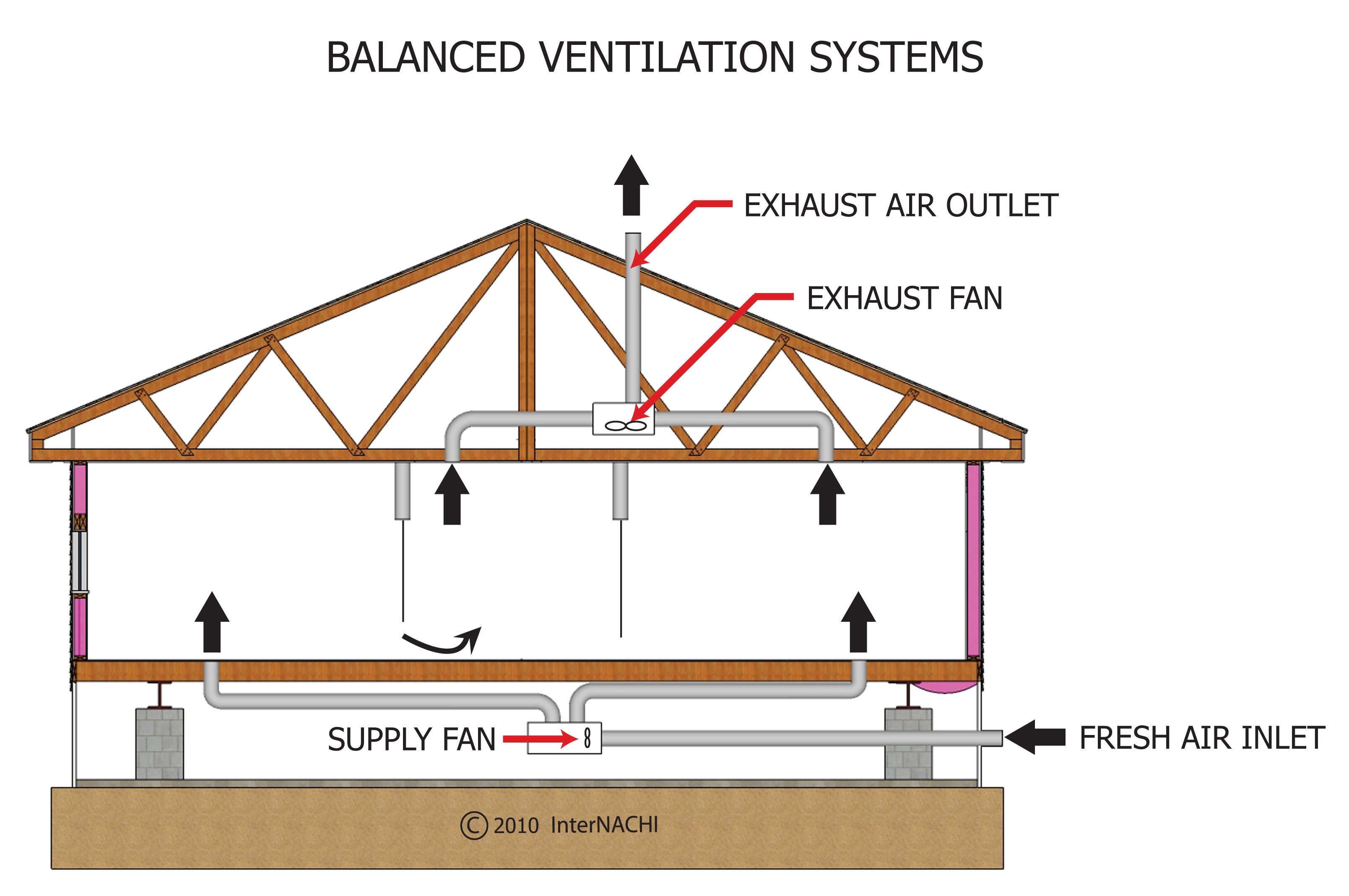
Ventilation Requirements in Homes: A Key Focus for Homeowners and Buyers in DFW
Proper home ventilation is essential for maintaining good indoor air quality, controlling moisture, preventing mold growth, and ensuring a healthy living environment — especially in Texas’s humid climate. During a home inspection in Keller or the DFW area, we pay close attention to verify that ventilation meets code standards.
Ventilation for Habitable Rooms
Habitable rooms (living rooms, bedrooms, kitchens, dining areas, etc.) require adequate fresh air to remove stale air, odors, and pollutants.
Natural Ventilation Rules:
• Operable openings (windows, doors, skylights, or approved louvers) must provide at least 4% of the room’s floor area as openable ventilation area.
• Example: A 200 sq ft bedroom needs at least 8 sq ft of openable window/door area.
Bedrooms require emergency escape openings, which also support ventilation.
Mechanical Ventilation Alternative:
• If natural ventilation is insufficient, a mechanical system can replace it.
• This often means a whole-house mechanical ventilation system, such as a heat recovery ventilator (HRV) or energy recovery ventilator (ERV), with ducts terminating outdoors.
Bathroom Ventilation
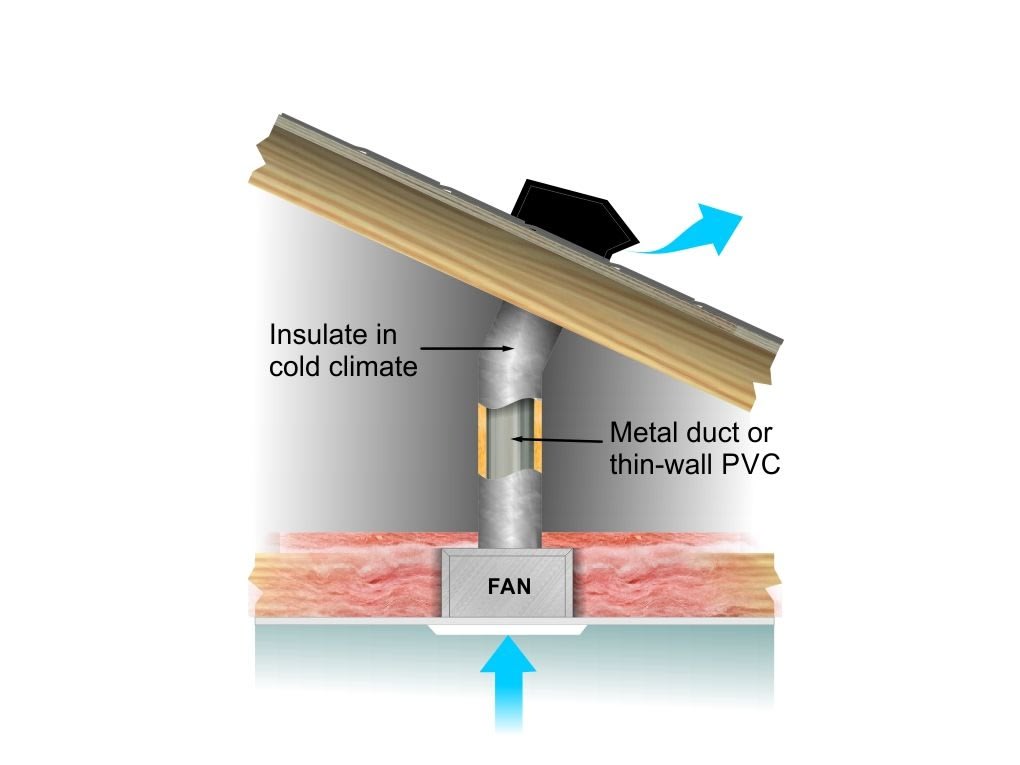
Bathrooms generate high moisture, so ventilation helps prevent mold, mildew which can cause structural damage — one of the most common issues we identify. You have 2 options for bathroom ventilation
1.Natural Option:
• Glazing (windows/doors) must total at least 3 sq ft, with at least 1½ sq ft operable (openable).
2.Mechanical Exhaust Requirement (Common Alternative):
• The mechanical fan must exhaust directly outdoors — never into an attic, soffit, crawl space, or toward another residence.
• Discharge requires an automatic or gravity-operated damper that closes when the fan is off to prevent backdrafting.
• Common rates: At least 50 cfm (cubic feet per minute) intermittent (exhaust fan on a switch, the most common option) or 20 cfm continuous for local exhaust.
Common Defect We See: Fans venting into attics — this traps moisture, damages insulation, and promotes fungal growth in the attic.
Whole-House Mechanical Ventilation
If you want a more efficient, but more expensive option, use a whole-house mechanical ventilation system in bathrooms for better moisture control, even if a window exists.
In energy-efficient or tightly built homes (common in new construction), natural air changes do not occur as much as in older constructed homes. Therefore, a whole-house mechanical ventilation system is required to provide continuous fresh air exchange. This ensures balanced supply/exhaust to maintain indoor air quality without excessive energy loss.
Why Ventilation Matters in Your Home Inspection
In DFW’s humid summers and variable weather, inadequate ventilation leads to condensation, mold, and poor indoor air quality. We inspect:
• All window operability.
• Bathroom fan ducting, termination, and damper presence.
• Intake/exhaust separations and screens.
• Signs of moisture damage or improper venting.
• Whole-house system presence and function (when applicable).
Protect Your Home and Family’s Health
Good ventilation keeps your DFW home fresh, dry, and safe. If you’re buying or selling in Keller, Fort Worth, or North Texas, let us inspect to make sure your home is in tip top shape.
Residential Code References
The fire safety standards listed above are from R303, R303.3, and R303.5 of the International Residential Code (IRC) 2018.